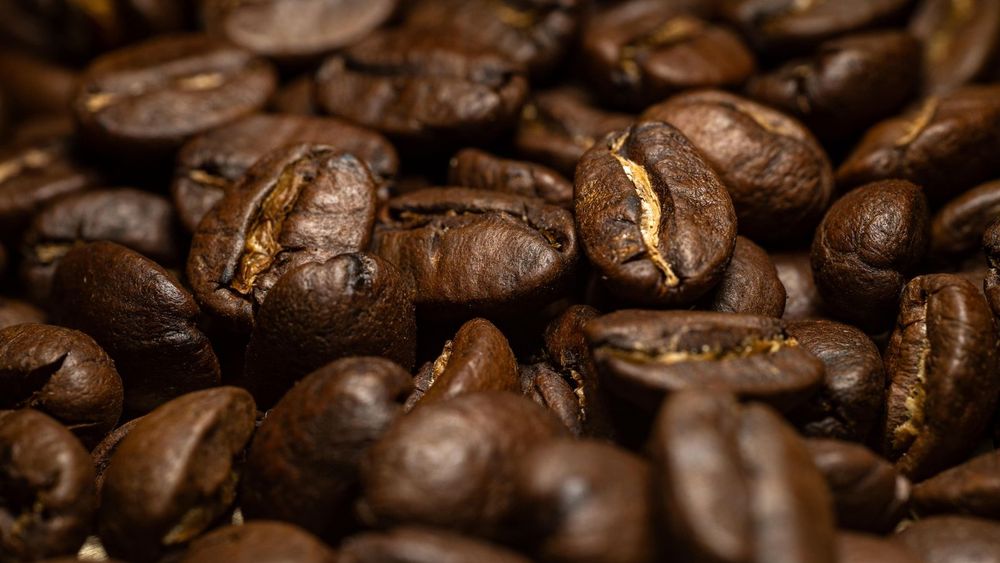
Which eight of the 23 varieties are listed here
On 15 September 2026, our coffee beans category lists 23 varieties. The eight shown here are the ones highest up in our overall rating, from 9.3 down to 8.6 points. At 8.6, however, five varieties crowd together, and there was no room left for the fifth, the Segafredo Intermezzo.
What is said here about a variety comes from its own review. The reviews are current as of September 2026; for them we evaluated manufacturer pages, Amazon catalogue data and enlarged product photos. We have not ground or brewed any of the beans, and no pack was ever on our table.
Behind every score are four sub-scores for build quality, performance, handling and value for money. Individual scores and overall score are our editorial assessment, nobody measured anything. One peculiarity makes the arithmetic easier: all eight are kilo bags of whole beans, so the guide price (a catalogue price on Amazon.de) is also the price per kilo.
Every brand counts differently, and no scale fits another
Almost everything in this category is decided by two pieces of information: the roast, and how far the roaster goes in disclosing its origin. The roast comes first, because it determines which machine the bean belongs in.
Only the number with which roasters describe their roast is different every time. Lavazza lists the Cremoso at intensity 8 out of 10, Dallmayr the Crema d’Oro at intensity 6 out of 10, Pellini the Vivace at 8 out of 9, Melitta the BellaCrema Espresso at strength 5 out of 5 and the La Crema at strength 3 out of 5. Mount Hagen adds a profile with strength 5 out of 7 and acidity 4 out of 7, Incapto a percentage bar with acidity 60, body 60, intensity 80, bitterness 80 and strength 60. The Bio Honduras comes without any such level.
The numbers only become useful within one range. Lavazza uses them to rank its own bean range, from the Espresso Italiano Aromatico at 7 up to the Espresso Lamborghini at 10. Melitta ranks the BellaCrema from the Crema Dolce at 2 to the Espresso at 5, Dallmayr the d’Oro ladder from the Crema d’Oro at 6 to the intensa and the Espresso d’Oro at 8 each. Even within one range the number itself is not entirely firm: for the BellaCrema Speciale, the technical data give a 2 and the description text on the same page a 3.
Then there is a mix-up that Melitta itself prints on the bag. On the front, two rows run one beneath the other: the strength, with the 5 circled on the Espresso, and below it the roast level, where four of five bean symbols are filled. Anyone who reads the 5 as a very dark roast is reading the wrong row. In its own online shop, Dallmayr shows a bar graphic whose intensity row shows five of five symbols for the mild Crema d’Oro and also five of five for the stronger intensa, so this row separates nothing. The text entry remains the one that counts there.
What actually turns out different in the cup depends less on the level than on the type of coffee. Three varieties on the list are pure Arabica: Bio Honduras, Incapto and Mount Hagen. For Lavazza and Pellini a Robusta share is stated. Dallmayr lists it on today’s product page under the botanical name Canephora, while the English Amazon text and a 2018 press release still say 100 per cent Arabica. For the BellaCrema Espresso, the Melitta online team confirmed the Robusta share in a reply under the customer reviews; for the La Crema, Melitta’s product information says nothing about the bean blend. Robusta releases more bitter compounds and more soluble solids when brewed, builds body and stabilises the crema. For someone pulling two cappuccinos every day, this difference matters more than any intensity level, because a pure Arabica holds its own less well against a lot of milk. What lies behind Arabica, Robusta and the roast levels is sorted out in the guide Coffee beans basics.
The third consequence of the roast lies in the approval. Mount Hagen names espresso machine, stovetop pot and bean-to-cup machine, Lavazza espresso and moka, Incapto bean-to-cup machine, espresso machine and moka pot. Dallmayr lists bean-to-cup machine and espresso machine on the product page, while the same company’s online shop writes only bean-to-cup machine. In the technical data of both BellaCrema varieties, Melitta names only the bean-to-cup machine, and Pellini intends all three Vivace for espresso and bean-to-cup machines.
For pour-over and French press, the sources disagree. The supplier of the Bio Honduras names both explicitly, and in the Amazon catalogue filter coffee is listed there as well. For the two BellaCrema varieties, both methods appear in the Amazon text, the technical data are limited to the bean-to-cup machine, and of the five brewing symbols on the Espresso bag only two can be read unambiguously in the photo, a bean-to-cup machine and a stovetop pot. With Pellini it depends on the blend: Pellini shows the bag of the Espressobar Vivace with the filter symbol, the Classica is listed on the card for the French press, and which Vivace is shipped under our number is open. Three reviews expressly advise against the long infusion: for the Cremoso against pour-over and French press, for the BellaCrema Espresso against pour-over, both because of an espresso roast that quickly tips into roasty bitterness there, and for the Crema d’Oro, whose preparation list contains neither method.
How far the roaster goes with origin
The information on origin falls into three levels among the eight roasters, and the top one is the most expensive.
At the very bottom is the formula. Dallmayr writes that top qualities from the best growing regions in the world are selected for the Crema d’Oro, and no country is named anywhere. Melitta leaves the growing country open for both BellaCrema varieties, although the same manufacturer lists a country-of-origin field for the 2026 BellaCrema Selection and enters Ethiopia and Nicaragua there. For Pellini the country of origin is missing for all three Vivace. One level up is Lavazza with two regions, South America and Southeast Asia.
At the top it becomes concrete, with altitude and processing, which according to our guide Coffee origin and flavour carry through into the cup. Incapto names Huila as the region, plus the municipalities of Pitalito and Acevedo, a growing altitude of 1,400 to 1,800 metres, the Castillo Supremo variety and washed processing. The supplier of the Bio Honduras names an altitude above 1,300 metres, shade trees, hand picking, washed processing, drying beds, the roasting location at the Lebenshilfewerk Hagenow and a batch size of 15 kilos. Mount Hagen lists three named cooperatives, HOAC in Papua New Guinea, Atahualpa in Peru and Sidama in Ethiopia, plus sun drying of 5 to 10 days to about 12 per cent residual moisture and Hamburg as the roasting location. What share each of the three countries contributes remains open, and no blend on this list states a mixing ratio.
What the information costs can be quantified. Between the Dallmayr Crema d’Oro with its formula and the Bio Honduras with its individual details lie €19.60 per kilo.
One figure is missing at every step of this ladder, though, and it is the only one that could be checked at the shelf: the roast date. For seven of the eight varieties the reviews expressly note that none could be found online, including the two whose suppliers advertise roast freshness. For the Crema d’Oro the review notes that Dallmayr publishes neither a best-before date nor a use-by period online. For a kilo that stays open for weeks, this is in our view the most sensitive gap in the whole category.
The eight varieties in order of rating
From place 5 onwards, four varieties carry the same 8.6. No fine-grained score decides between them; they are ranked by the abbreviation in their page address, from dallmayr to pellini.
Place 1: 360° Rundum Ehrlich Bio Honduras, 9.3 points
The Bio Honduras is in front because no other variety on the list discloses growing altitude, processing, roasting location and batch size together, and because the hand roasting at the Lebenshilfewerk explains part of the kilo price. The supplier also states that every harvest is examined several times in a German food laboratory for contaminants and mycotoxins, but names neither the laboratory nor the examination date nor any measured values. If you drink it black and the acidity of previous beans has bothered you, it is an obvious choice: less acidity is, according to the supplier, the aim of its long drum roast, though it presents no measured value for it. Its weakest individual score is value for money at 7.9, the lowest value in this column on the whole list.
Place 2: Incapto Single Origin Kolumbien, 9.0 points
The Incapto is here because it names the origin down to the municipality and is the only one of the eight to state a quality rating, 84 points by its own account. At 36 cents above place 1, it is also the most expensive variety on this list. If you drink espresso or coffee black and really read up on the details, it is right for you, because the roaster expressly recommends it without milk. Two things speak against it: for this bean Incapto shows no certification label, and the Amazon title promises espresso, while the product page describes a medium roast for bean-to-cup machines.
Place 3: Lavazza Espresso Italiano Cremoso, 8.9 points
For the Cremoso, the classification carries the place: Lavazza cleanly separates roast level and intensity, attaches the 8 to a range in which every level from 7 to 10 is filled, and gives storage periods in months, which are listed below in the question on the opened kilo. It is intended for espresso and for the stovetop pot, and that is what we would buy it for. Under the line IDEAL FOR, the bag shows four appliance symbols, of which only the stovetop pot can be clearly recognised in the product photo.
Place 4: Melitta BellaCrema Espresso, 8.8 points
The BellaCrema Espresso carries our Editors’ pick badge because of its value for money, at 9.2 the highest individual score in this column on the list, and because of an assignment the manufacturer makes itself: machine use bean-to-cup machine, recommended for milk-foam specialities and espresso. It nevertheless also appears in Melitta’s own range category coffee for espresso machines. It belongs in households where cappuccino and latte macchiato come out of the same machine in the morning and nobody wants to touch the grinder. If you prefer something milder, you will miss the mark here, because within the BellaCrema range the 5 is the highest value.
Places 5 and 6, both at 8.6: Dallmayr Crema d’Oro and Melitta BellaCrema La Crema
Two varieties for the long cup, 10 cents apart in guide price. Dallmayr describes the Crema d’Oro as velvety fine and mild, and Melitta puts the La Crema at strength 3, the middle of its own five-step scale. The difference lies in the information. For the Crema d’Oro, Dallmayr names the bean blend and a roasting process, gently roasted at low temperature for a long time, and the bag carries the Langzeit Röstung (long-time roast) label. For the La Crema, Melitta names no bean blend, and a roast level in words appears only in the Amazon text: medium, plus the wording gently roasted. In the individual scores the La Crema leads on value for money, 9.0 against 8.2, the Crema d’Oro in the other three.
Place 7: Mount Hagen Espresso Bio, 8.6 points
The Mount Hagen is on the list because, according to the manufacturer, it is the only variety to carry three labels, EU organic, Naturland and Fairtrade, and because its product page gives figures for the roast: 15 to 16 minutes at about 200 °C in a drum roaster. We would buy it for an espresso machine or a stovetop pot, neat or with a little milk, if the labels are the reason. Filter coffee and French press are missing from its preparation list, however, and the two pack photos contradict each other: the picture from the Amazon catalogue shows Mexico as the third country, the photo in the manufacturer’s shop Ethiopia. What counts is what is printed on the front of your bag.
Place 8: Pellini N.82 Vivace, 8.6 points
With the Vivace, the rating holds even when the assignment stays open: Pellini today lists three blends of this name, and all three are at intensity 8 out of 9, consist of Arabica and Robusta, and are intended for espresso and bean-to-cup machines. That is exactly what carries the place. Which of the three bags is shipped under this article number, on the other hand, has not been clarified: the catalogue photo shows the Classica, and two of the manufacturer’s buy buttons lead to the same number. For the stovetop pot you would thus be buying an unknown, for the bean-to-cup machine a bean under €20 per kilo. Its value for money stands at 8.1.
What sets each variety apart from the others
| Model | The difference | Price | Our rating | Choose this if |
|---|---|---|---|---|
| 360° Rundum Ehrlich Bio Honduras | Hand roasting in batches of 15 kilos at the Lebenshilfewerk Hagenow | approx. €35.59 | 9.3 | you drink it black and also use pour-over or French press |
| Incapto Single Origin Kolumbien | Cupping score from the roaster, plus variety and growing altitude named | approx. €35.95 | 9.0 | you want a named single origin and can do without a label |
| Lavazza Espresso Italiano Cremoso | Roast level and intensity separated, house scale from 7 to 10 filled throughout | approx. €16.99 | 8.9 | you make espresso in an espresso machine or a stovetop pot |
| Melitta BellaCrema Espresso | Highest level of its own range, listed by the manufacturer for milk drinks | approx. €17.99 | 8.8 | cappuccino and latte macchiato come from the bean-to-cup machine in the morning |
| Dallmayr Crema d’Oro | Bean blend and roasting process named | approx. €15.99 | 8.6 | you want to serve a bean-to-cup machine and an espresso machine from one bag |
| Melitta BellaCrema La Crema | Middle level of the range, recommended for the long cup | approx. €15.89 | 8.6 | someone drinks along who finds strong roasts too much |
| Mount Hagen Espresso Bio | According to the manufacturer three labels, roasting time and temperature published | approx. €23.01 | 8.6 | labels are your reason to buy and you drink it neat or with little milk |
| Pellini N.82 Vivace | All three Vivace from Arabica and Robusta, intensity 8 out of 9 | approx. €19.21 | 8.6 | your bean-to-cup machine should get a bean under €20 per kilo and the flavour direction may stay open |
Guide price and score of each row come from the data sheet of its review, as of 15 September 2026. What Amazon charges on the day of your order may differ.
Three price bands between €15.89 and €35.95
Four of the eight lie within a band of €2.10: the Melitta BellaCrema La Crema at approx. €15.89, the Dallmayr Crema d’Oro at approx. €15.99, the Lavazza Espresso Italiano Cremoso at approx. €16.99 and the Melitta BellaCrema Espresso at approx. €17.99. In this price band you get a house scale and, at least in the Amazon text, a roast level in words. None of the four names a growing country, only Lavazza gives two regions.
The middle is taken by two varieties. From the Cremoso to the Pellini Vivace it is €2.22, and this extra charge buys no additional information on origin. From the Vivace to the Mount Hagen Espresso Bio it is a further €3.80. For that, the details given above under place 7 are added, and the three named cooperatives.
At the top are the two single origins, the Bio Honduras at approx. €35.59 and the Incapto at approx. €35.95. Down to the Mount Hagen the gap is €12.58. For that you get the individual details listed in the section on origin.
From what point does the extra charge buy nothing measurable? We see the limit at about €23. From there on you pay for information about cultivation and roasting, and that remains a claim by the suppliers: the 84 points of the Incapto name no assessing body, and for both organic varieties the organic inspection numbers differ between the product page and the legal notice. All amounts are catalogue figures from September 2026.
Decided by machine, quantity and label
If you have a bean-to-cup machine that mainly makes milk drinks, three of the four cheapest varieties are listed for exactly that: the BellaCrema Espresso and the La Crema for milk-foam specialities, the Crema d’Oro according to the bag for caffè latte, caffè macchiato and cappuccino. If you switch to one of them, Dallmayr advises that you absolutely readjust the machine, and names coffee quantity, grind size, water temperature and brewing pressure as the adjustment screws. If the coffee then comes out bitter, Melitta points the way in the product FAQ: the grinder may then be set too fine and should be set coarser while grinding is running.
If you work with an espresso machine and make your own adjustments, the Cremoso and the Mount Hagen come into question, though Lavazza names only espresso rather than the espresso machine. The two demand different things. With the medium roast, under-extraction comes through immediately as acidity, and you correct via the grind size before turning the temperature. The dark roast is more brittle and porous, releases its soluble compounds faster and therefore tends to need a coarser setting. As starting values for the espresso machine, Mount Hagen gives 7 grams of ground coffee, 30 millilitres of water and 25 seconds of flow time. That corresponds roughly to a single portion: for the double shot, the brew calculator works out the quantities, and from Mount Hagen you then mainly take over the time.
If you brew on the stove, the approval shows the way: Lavazza names moka expressly, Mount Hagen the stovetop pot, Incapto the moka pot. How finely to grind, the sources say differently: for the stovetop pot Mount Hagen names a fine grind that lies between the espresso and the French press grind size, so coarser than for espresso, while Bialetti writes in the instructions of the Moka Express that you should not use finely ground coffee. You do not tamp the grounds in the funnel, as Mount Hagen advises. The procedure at the pot is explained in the moka pot guide.
If you drink little, quantity decides. A kilo lasts about four months at one cup a day, and just under four weeks at two double espressos. If your consumption is one cup a day or less, the bag thus stands open for months, and then one of the smaller bags from the grinder question above is worthwhile, which several suppliers offer outside our article numbers.
If you need a label, two remain: the Mount Hagen with the labels named at place 7 and the Bio Honduras, which according to the supplier carries the EU organic marking. For the other six, neither organic nor Fairtrade nor Rainforest Alliance appears on the product page.
The Segafredo and 14 further varieties outside the list
The Segafredo Intermezzo, at 8.6 points and approx. €17.19, ties with places 5 to 8 and stays outside only because its abbreviation segafredo-intermezzo sorts after pellini-n-82-vivace. Its review describes a dark, Robusta-led blend, for which Segafredo names an aroma valve and a resealable pack, and which is also available under the same variety name as ground coffee, as ESE pods and as capsules. Its review considers it the wrong choice for pour-over and French press.
The lowest pack price in the category belongs to the Dallmayr Prodomo Entkoffeiniert (decaffeinated) at approx. €9.29 and 8.3 points, though for 500 grams, which works out at €18.58 per kilo. The highest guide price is that of the Starbucks Espresso Roast at approx. €58.24 and 8.0 points, and whether that is a kilo price is stated only in its review, which has not yet been revised, so we do not set it against any of these varieties here. The guide price in the list below is therefore always the price of the pack.
The remaining 13 stand at 8.5 points or below. Their reviews have not yet been revised, and until then we show only score and guide price for each variety:
- Gimoka Classico Espressobohnen, 8.5 points, approx. €13.63
- Melitta BellaCrema Speciale, 8.5 points, approx. €16.99
- J. Hornig Caffè Crema Bio, 8.4 points, approx. €30.99
- Jacobs Barista Espresso, 8.4 points, approx. €19.99
- Lavazza Tierra for Planet, 8.4 points, approx. €23.49
- Melitta Barista Crema, 8.4 points, approx. €17.99
- Gorilla Super Bar Crema, 8.3 points, approx. €19.96
- Caffè Mauro Torrefazione Avvolgente, 8.2 points, approx. €21.46
- Jacobs Krönung Caffè Crema, 8.2 points, approx. €15.29
- Schwiizer Schüümli Crema Mild, 8.2 points, approx. €21.99
- Gimoka Armonioso, 8.1 points, approx. €15.34
- Starbucks Espresso Roast, 8.0 points, approx. €58.24
- Amazon Colombian Medium Roast, 7.9 points, approx. €14.19
This cut has two consequences. Under €15 per kilo you will find nothing on this list, and our Value pick badge goes to the Gimoka Classico, which at 8.5 points stays just below. If you are looking for decaffeinated, you get no further here either: of the eight varieties, none is decaffeinated, and in the category this feature is held only by the Dallmayr Prodomo.
All products on the list side by side
| Product | Type | Rating | Price | |
|---|---|---|---|---|
| Bio Honduras Säurearm | Coffee beans and roasters | ★★★★★ 4.7 | approx. €35.59 | View on Amazon → |
| Single Origin Kolumbien | Coffee beans and roasters | ★★★★★ 4.5 | approx. €35.95 | View on Amazon → |
| Espresso Italiano Cremoso | Coffee beans and roasters | ★★★★★ 4.5 | approx. €16.99 | View on Amazon → |
| BellaCrema Espresso | Coffee beans and roasters | ★★★★☆ 4.4 | approx. €17.99 | View on Amazon → |
| Crema d'Oro | Coffee beans and roasters | ★★★★☆ 4.3 | approx. €15.99 | View on Amazon → |
| BellaCrema La Crema | Coffee beans and roasters | ★★★★☆ 4.3 | approx. €15.89 | View on Amazon → |
| Espresso Bio | Coffee beans and roasters | ★★★★☆ 4.3 | approx. €23.01 | View on Amazon → |
| N.82 Vivace | Coffee beans and roasters | ★★★★☆ 4.3 | approx. €19.21 | View on Amazon → |
The prices are guide values from our price boxes and change with the retailer. Prices are in euros from Amazon.de and may differ in your country. You will find the current status for each product on the linked product pages, and all products side by side in the comparison table.