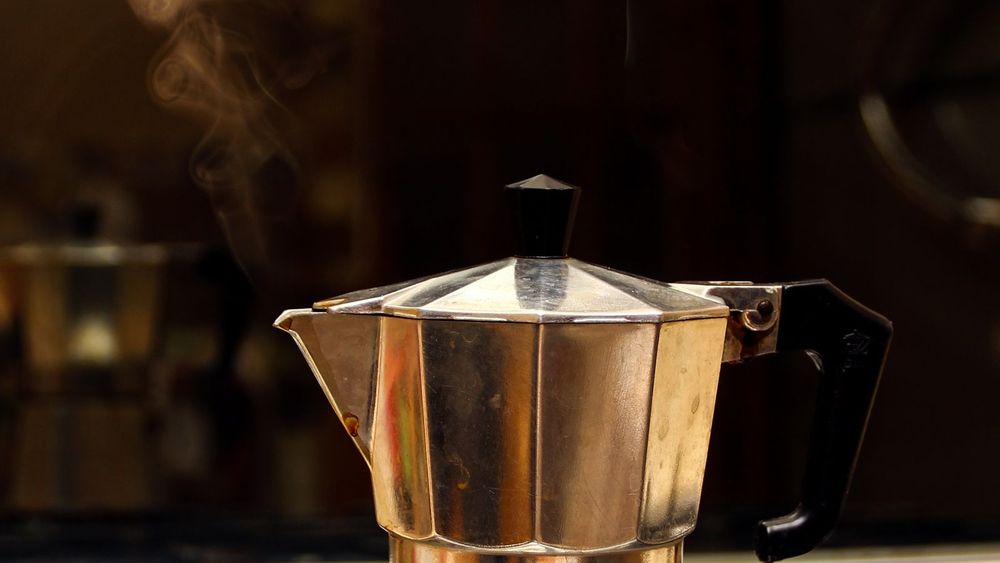
The short answer: According to the 2026 TÜRKPATENT entry, you use 1 g of very finely ground coffee per 10 ml of cold water, so 6 to 9 g for a cup of 60 to 90 ml. Water, coffee and sugar go into the cezve together before heating, and you stop at the first foam. The foam is poured into the cups first, then the rest including the sediment.
Since 10 March 2026, “Türk Kahvesi” has been registered with the Turkish Patent and Trademark Office TÜRKPATENT as a traditional product name (No. G8, applicant: Türkiye Odalar ve Borsalar Birliği, TOBB for short). The five pages contain figures on grind size, ratio, sweetness, water and heating. It is a product description for protecting the name, not a laboratory finding, and it gives no measurement source for its figures. That is why every figure from it is given here with its origin, next to what studies have measured. The document is in Turkish; the rendering here is our own translation of its sense.
What counts as Turkish coffee
The entry defines ground coffee from light, medium or dark roasted beans, Arabica, Robusta or a blend, ground fine or very fine, and the drink made from it. Instant coffee is excluded. It is prepared by cooking the powder in a controlled way with water in the same vessel, called pişirmek in Turkish.
The vessel is the cezve. According to TÜRKPATENT, it is traditionally used to control heat and foam. The document names no material, shape or fill level. It also allows automatic machines with a concealed heating element, provided they control heat and foam in the same way.
On origin, the entry says that coffee culture in Anatolia goes back to the 1500s and that the first coffee house stood in Istanbul-Tahtakale. UNESCO has listed “Turkish coffee culture and tradition” on the Representative List of the Intangible Cultural Heritage since 2013 (decision 8.COM 8.28). Its description: freshly roasted beans ground to a fine powder, powder, cold water and sugar put into a pot, slowly boiled on the stove until the desired foam forms, served in small cups with a glass of water. The sediment in the empty cup is often used there for fortune telling.
The method, step by step
- Measure the water. It should be at room temperature or colder; TÜRKPATENT expressly rules out preheated water.
- Add the coffee, then the sugar. The document prescribes this order (first water, then coffee, then sugar).
- Stir everything evenly with the spoon. The entry requires this before heating. Whether you stir afterwards, it leaves open.
- Heat slowly. The mixture should reach 88 to 92 degrees in 2.5 to 3 minutes. The document gives even extraction as the reason for slow heating.
- Take the cezve off as soon as foam forms. According to TÜRKPATENT, anyone who cooks longer risks burnt and bitter notes and a foam that collapses quickly.
- First spread the foam evenly across the cups, then pour in the rest including the sediment.
- Serve water alongside. It is meant to help neutralise unwanted flavours in the mouth so that you perceive the coffee better.
Grind size: 75 to 125 micrometres and what grinders say
The entry gives a mean particle size of 75 to 125 micrometres, powder-like. Very fine grinding, the document says, produces foam and sediment and improves the yield of flavour and aroma.
For hand grinders there are manufacturer figures. In its own FAQ, Comandante gives 3 to 8 clicks for ibrik, Turkish mocha, on the C40 MK4, against 7 to 13 for espresso. Clicks are counted from a zero point you find yourself, and more clicks means coarser. The manual of the KINGrinder K6 gives 20 clicks for Turkish and 40 for espresso, expressly only as a reference; according to the manufacturer, the grinder adjusts by 16 micrometres per click. The click counts of the two grinders are not comparable, because zero point and click width differ. What they share is the order: for both, Turkish is the finest setting, finer than espresso.
The common claim that hand grinders cannot reach this range is not documented. Two manufacturers have a Turkish setting of their own; but none of the sources we read measured the particle size.
Our assessment: set the grinder to the manufacturer’s Turkish setting if there is one, otherwise to finer than your espresso setting, which is also how the “Turkish coffee (ibrik)” row in our guide Coffee grind size lists it. The click counts for the other methods are there. We do not give a separate table of texture comparisons such as flour or sand here.
How much coffee per how much water
The figures diverge here.
| Source | Coffee | Water | Ratio |
|---|---|---|---|
| TÜRKPATENT, product description 2026 | 1 g | 10 ml | 1:10 |
| Güçlü and Selli 2022, laboratory study (recipe from Amanpour and Selli 2016) | 5 g | 75 ml | 1:15 |
| Elsahoryi et al. 2025, study with 52 female participants | 7 g | 55 ml | around 1:7.9 (our own calculation) |
So the range runs from about 1:8 to 1:15. Both studies supply experimental conditions, not recommendations. Elsahoryi and colleagues dosed by body weight, at 0.136 g of coffee per kilogram, to reach 3 mg of caffeine per kilogram. Güçlü and Selli took their recipe from the earlier work.
We would start with the TÜRKPATENT ratio, because it is the only figure that describes the drink itself. The document works with cups of 60 to 90 ml, and one gram per ten millilitres makes that 6 to 9 g per cup. A middle value that is easy to calculate with: 7 g in 70 ml. For two cups that is 14 g in 140 ml. According to the entry, several cups may go into the cezve together.
Use a scale rather than a spoon, because we have no source for the weight of a teaspoon of ground coffee. The two-thirds rule for fill level that is sometimes quoted is not documented either. Leave visible room above the water, because the foam rises. Our German brew calculator lists Turkish coffee only as a grind size row and calculates no dose for it.
Heat, time and the question of whether it may boil
The entry contradicts itself here. It requires 88 to 92 degrees in 2.5 to 3 minutes and says the coffee must not boil. Elsewhere it says the mixture is heated to the boiling point and that the boiling ends as soon as foam forms.
More was measured:
| Source | Vessel and heat source | Time | Temperature |
|---|---|---|---|
| TÜRKPATENT | Cezve | 2.5 to 3 min | 88 to 92 °C, stop when foam starts |
| Güçlü and Selli 2022 | Automatic machine (Arçelik Mini Telve) | 90 s | mean peak temperature 98.8 °C |
| Güçlü and Selli 2022 | Stainless steel pot (heat source not stated) | 3 min | 99.2 °C |
| Güçlü and Selli 2022 | Copper pot in hot sand | 4 min | 99.8 °C |
| Elsahoryi et al. 2025 | Cezve | 3 min | up to 100 °C, served at 95 ± 2 °C |
Our assessment: going by the context of the document, “do not boil” means taking it off when the foam starts, and is not a temperature limit. The thermometers in the studies show close to 100 degrees in the mixture. No source documents that 88 to 92 degrees was measured at the foam. We would therefore go by the foam and take the clock as a guide, not the other way round.
Foam once or twice? TÜRKPATENT describes once: end the cooking when foam begins to form. Güçlü and Selli let the samples foam up “to twice” and then settle for five minutes; that is a laboratory protocol and not a drinking recommendation. Neither source documents that every further boil-up makes it bitter; only the link with cooking time is documented. We would begin with once, because that is the official description and means the shorter cooking time.
Why it works this way
The effect is documented, not the mechanism. TÜRKPATENT cites three connections: finer grinding improves the yield and makes foam and sediment possible. Slow heating gives even extraction. And cooking time decides the character: cooked too long, the coffee tastes of burnt notes and bitterness and the foam collapses. Too short at high temperature, it tastes raw (çiğ) and foams too little.
Güçlü and Selli made one measurement on the vessels. In the automatic machine with a 90-second cooking time, 1900 mg of phenols (as gallic acid equivalent) per litre remained, in the stainless steel pot 1558, in the copper pot 1413. For pyrazines, volatile roast aroma compounds, it was the other way round: 2957 µg/l in the copper pot, 2534 in the stainless steel pot, 2027 in the automatic machine. The authors attribute the phenol values to the shorter cooking time and also name the higher pressure in the machine as a possible factor. The study does not cleanly separate vessel, heat source, time and temperature, and it has no tasting.
Sugar, water and serving
TÜRKPATENT gives the sugar in grams and cubes per cup:
| Order | Cubes | Grams per cup |
|---|---|---|
| sade | 0 | 0 |
| az şekerli | 1 | 2 to 3 |
| orta şekerli | 1.5 | 3 to 4.5 |
| şekerli | 2 | 4 to 6 |
You will find teaspoon amounts in many instructions. They are not a documented conversion, and Turkish newspaper and recipe sites contradict each other on this. The sugar goes into the water before heating.
For water, the entry requires clean drinking water with a pH of 6.8 to 7 and a hardness of 7.20 to 14.20 “Fr”. It does not explain the unit. Most likely French degrees of hardness are meant, which by our conversion (1 °dH, German degrees of hardness, corresponds to roughly 1.79 °fH; the factor is not from the source) would be about 4 to 8 °dH. That is an assumption. We found no measurement for Turkish coffee. How hardness affects filter coffee and espresso is covered in the guide Water hardness and coffee.
Serving: foam first, then the rest with sediment. In their introduction, Güçlü and Selli write, without a source of their own, that Turkish coffee is originally served in small cups with lokum as a starter.
Common faults
| Symptom | Cause according to the source or from the calculation | What you change |
|---|---|---|
| Hardly any foam | cooked too briefly at high temperature; powder not fine enough (TÜRKPATENT) | grind finer, heat more slowly |
| Burnt or bitter | cooked too long (TÜRKPATENT) | take off when foam starts |
| Raw taste | cooked too briefly at high temperature (TÜRKPATENT) | use the full 2.5 to 3 minutes |
| Foam collapses quickly | cooked too long (TÜRKPATENT) | take off earlier |
| Thin | ratio wider than 1:10 (our inference) | go to 1 g per 10 ml with a scale |
With the sediment there is nothing to “fix”. According to TÜRKPATENT it belongs to the drink and to its traditional features.
Sediment, cafestol and caffeine
Unfiltered coffee contains cafestol, a substance that can raise serum cholesterol. Urgert et al. (1995, Journal of Agricultural and Food Chemistry) measured per cup:
| Preparation | Cafestol per cup |
|---|---|
| Turkish or Greek coffee | 3.9 ± 3.2 mg |
| French press | 3.5 ± 1.2 mg |
| Scandinavian boiled coffee | 3.0 ± 2.8 mg |
| Italian espresso | 1.5 ± 1.0 mg |
Paper filter, instant coffee and percolator came out negligibly low. The scatter is large, for Turkish coffee almost as high as the mean. The cup size of the study is not in the abstract, so nothing can be derived for the mocha cup. According to the abstract, a stronger brew did not raise the diterpenes in Turkish coffee.
The authors calculate: for every 10 mg of cafestol a day, total serum cholesterol rises by 5 mg/dl. Five cups a day of Turkish coffee, French press or boiled coffee could therefore raise it by 8 to 10 mg/dl. Whether and how much sediment you drink is therefore not purely a matter of taste. If you have raised blood lipids, discuss it with your doctor.
The cezve: material and care
TÜRKPATENT names no material, and UNESCO speaks of a “coffee pot”. Güçlü and Selli cooked in a stainless steel pot (heat source not stated) and in a copper pot in hot sand.
On the safety of metal in contact with food, the BfR (German Federal Institute for Risk Assessment) published an opinion in 2025. For the release of elements from uncoated and enamelled metal articles there are no statutory limits in the EU. In the 2022 monitoring of 194 articles, the BfR saw no cause for concern for the majority. The BfR advises following the manufacturer’s instructions for use and care. It did not examine a cezve or a tinned copper pot, so we cannot document a statement about their safety or risk. Whether your pot may go in the dishwasher and whether scouring agents are allowed is in its instructions.
What the sources do not say
We found these gaps while reading. Instructions that fill them have no source that we know of:
- Grind size: How TÜRKPATENT measured the particle size is not in the entry, and none of the sources we read measured whether a hand grinder actually reaches 75 to 125 micrometres.
- Quantity and vessel: The entry gives no maximum number of cups per cezve, and the weight of a teaspoon of coffee is in no source. That tinned copper is the classic choice we also found nowhere.
- Heat: The entry does not say where the 88 to 92 degrees come from.
- Foam: How the köpük forms physically is explained by no source we read. We found only work on the foam of instant coffee, espresso and cold brew, which cannot be transferred. For “cold water” there are two sources (UNESCO and TÜRKPATENT), but no reason.
- Serving: Waiting time before drinking, preheated cups, cardamom and sugar at the table are not mentioned in the entry. On the order of lokum and coffee we know no documented source, so we set no rule.
- Vessel study: Güçlü and Selli say nothing about taste or bitterness.
Which devices we list
Our catalogue does not list a cezve, an ibrik or an electric Turkish coffee maker. The espresso maker category on our German site contains moka pots, and that is a different device. How the moka pot is used is in the moka pot guide.
What we do have are grinders with manufacturer figures for the Turkish setting. The Comandante C40 MK4 and the KINGrinder K6 are described above. According to the product page, the K6 container holds 25 to 30 g, so at 6 to 9 g per cup one filling is enough for about three to five cups (our own calculation). For the 1Zpresso J-Ultra the information differs: the Amazon listing additionally mentions ultra-fine grounds for Turkish coffee, while the manufacturer’s page interprets them as espresso. The fineness was not measured. You will find further hand grinders in our German ranking of hand grinders.