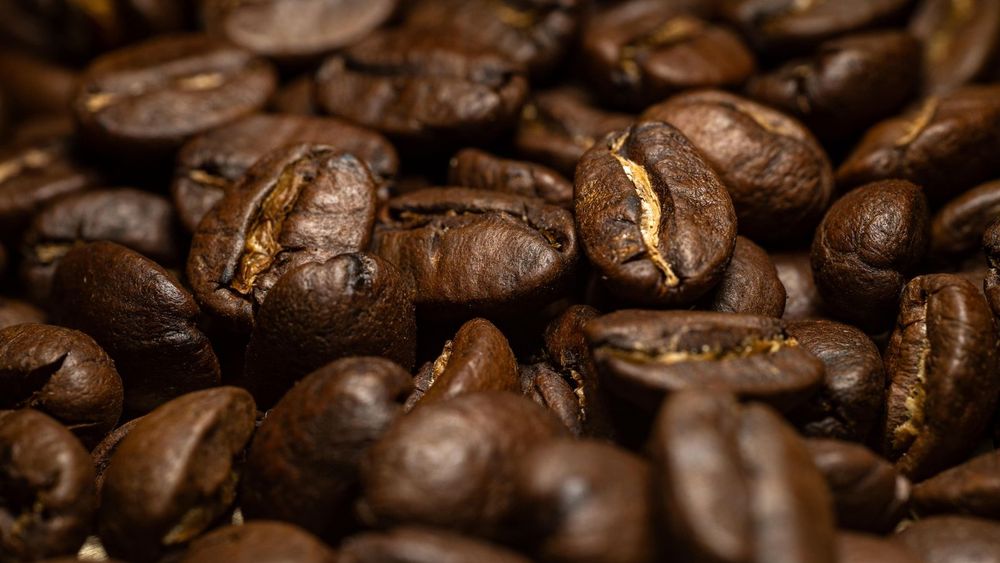
The short answer: Under the German Coffee Ordinance (Kaffeeverordnung, § 2 para. 3), green and roasted coffee may be called decaffeinated if the caffeine content is 0.1 per cent of the dry matter or less (1 g per kg). The caffeine is usually removed from the green coffee, using water, supercritical CO2 or the solvents ethyl acetate and dichloromethane. The Deutscher Kaffeeverband (German Coffee Association) gives 2 to 5 mg of caffeine for a 150 ml cup; measurements in US cafés found up to 13.9 mg per 473 ml. On taste, studies give contradictory findings.
How the caffeine gets out of the bean
The Deutscher Kaffeeverband describes three stages. First the green coffee is steamed or pretreated with water. This opens up the surface and cell structure for the caffeine, which according to the association sits in crystalline form on the cell walls. Then an extraction agent dissolves the caffeine out, a physical process: the agent takes up the caffeine selectively, is separated off when saturated, freed of the caffeine and reused in a cycle until, in the association’s words, almost all the caffeine has been removed. Finally the coffee is dried to the normal moisture content of green coffee and afterwards roasted like any other.
The association names four approved agents: dichloromethane, ethyl acetate, carbon dioxide and aqueous coffee extract, from which the caffeine is removed with activated carbon. So it counts CO2 and the water route among the extraction agents too. Keep that in mind when you hear “solvent-free”: it usually means “without an organic solvent”.
The claim that nothing can be extracted from roasted coffee any more appears in many texts and is not correct as stated. Chiang and colleagues (Journal of Food Science, 2018) extracted caffeine in the laboratory from raw and roasted beans of three varieties at different temperatures. It came out faster from the roasted beans, and at low temperatures the difference was clear. The authors see a possible industrial application in this. The usual route remains via green coffee (Kaffeeverband, Verbraucherzentrale Bayern, the Bavarian consumer advice centre). The Coffee Ordinance applies expressly to both green and roasted coffee.
You can work out how much effort lies behind the word from two figures of the association. According to the association, non-decaffeinated coffee has about 1.5 per cent caffeine, and the upper limit is 0.1 per cent. Our own calculation follows from that. With the stated starting content of about 1.5 per cent, around 93 per cent of the caffeine has to go, leaving a remaining ratio of at most about 1 to 15. With a starting content of 1.2 per cent it is around 92 per cent. The association’s brochure gives 0.8 to 1.5 per cent for Arabica and 1.7 to 3.5 per cent for Robusta; from these come around 88 to 93 per cent for Arabica and around 94 to 97 per cent for Robusta. The required share therefore depends on the starting content. This is not a measured value, because the reference bases (green or roasted coffee, dry matter) are not quite the same.
The processes in detail
The table shows who says what about which process.
| Process | Extraction agent | Source | Statement on decaffeination |
|---|---|---|---|
| Swiss Water Process | Water with Green Coffee Extract, carbon filter | Swiss Water (manufacturer) | 99.9 per cent (blog of 13.11.2025) |
| Mountain Water Process | aqueous solution of soluble coffee substances | Descamex (manufacturer) | no percentage on the page |
| CO2 process | supercritical carbon dioxide | Max Planck Society 2014, Honda et al. 2022 | minus 91.5 per cent in one pilot sample |
| Ethyl acetate | ethyl acetate | Descafecol (manufacturer) | no figure on the pages checked |
| Dichloromethane | dichloromethane | Kaffeeverband, Descamex | no figure on the pages checked |
In the Swiss Water Process the green coffee is cleaned and soaked in water. Then it comes into contact with Green Coffee Extract, a water solution containing the water-soluble coffee constituents but no caffeine. According to Swiss Water, only caffeine molecules migrate out by diffusion. Drying is done with a high air flow at low temperature, and the caffeine-containing extract runs over carbon filters and is reused for new beans. Swiss Water calls the process chemical-free. That is the manufacturer’s own statement. The Kaffeeverband lists the aqueous extract with activated carbon among the extraction agents, so whether “chemical-free” fits depends on the definition.
The Mountain Water Process is operated by Descamex in Mexico, which says it has been the first decaffeination plant in Latin America since 1980. The sequence according to Descamex: steam treatment, extraction under controlled flow, controlled temperature, pressure and vacuum with a saturated aqueous solution, three-stage drying. The same company describes on the same page a “Proceso EM” with methylene chloride, which is dichloromethane. So “from Mexico” says nothing about the process; only the name Mountain Water stands for the water route.
The history of the CO2 route is told by the Max Planck Society (retrospective of 11.08.2014). Kurt Zosel of the Max Planck Institute for Coal Research in Mülheim noticed in 1967 that caffeine dissolves in supercritical CO2, and the patent followed three years later. CO2 is supercritical above 30.1 degrees Celsius and above 73.8 bar. The article cites 100,000 tonnes of raw material per year worldwide (as of 2014). Honda and colleagues (Journal of Oleo Science, 2022) worked on a 30-litre pilot plant with supercritical CO2 and water as a co-solvent on Arabica: the caffeine fell by 91.5 per cent, trigonelline by 13.8 per cent, and the bean mass by about 3 per cent. The introduction to the study calls supercritical CO2 costly.
For ethyl acetate the positions differ. The Verbraucherzentrale Bayern writes that it counts as a natural process because the substance also occurs in fruit and vegetables, and that solvent processes are relatively inexpensive. Descafecol in Colombia describes a natural process with high-mountain spring water and ethyl acetate of natural origin, saying the substance is contained in all coffee beans.
Now the percentages. Swiss Water advertises 99.9 per cent, Honda found 91.5 per cent in one pilot sample, and the law requires around 93 at a starting content of 1.5 per cent. Arithmetically the pilot sample would fall just below that, but we do not know its starting content, so this is a hint and not a finding. Roaster websites give 97 per cent and more for solvent processes; as an independent value this is not usable.
Residues and limits
Directive 2009/32/EC on extraction solvents (an EU directive) regulates what may remain. For dichloromethane used for decaffeination, the limit is at most 2 mg/kg in roasted coffee (5 mg/kg in tea). According to the same table, methyl acetate and ethyl methyl ketone are also permitted, each at most 20 mg/kg in coffee or tea. Ethyl acetate and carbon dioxide appear in a different part: usable according to good manufacturing practice, with no figure. The seventh recital speaks of unintentional, technically unavoidable residues.
On how hazardous these are, the statements stand side by side. The Kaffeeverband considers all approved agents harmless to health, with use, purity and residues strictly regulated by European directives. The Verbraucherzentrale Bayern writes that dichloromethane is suspected of being carcinogenic. The Max Planck Society states that dichloromethane and ethyl acetate too could harm the organism if taken orally and are almost impossible to remove completely. That is the statement of the 2014 article. We do not weigh in here, because the figure that would matter is missing: the actual amount of residue in commercial coffee. We found no measurement data from food monitoring on this. For that reason “residue-free” for CO2 and “far below the limits” for the solvents are not documented either, since a limit is an upper bound and not a measurement result.
How much caffeine is left in the cup
The limit is set in the Coffee Ordinance. The word “decaffeinated” (entkoffeiniert) is mandatory for green and roasted coffee with at most 1 g of caffeine per kg of coffee dry matter, and for solid, paste-like or liquid coffee extract with at most 3 g per kg of extract dry matter, that is 0.1 and 0.3 per cent. It is an upper limit and not a typical content.
Speaking of an EU rule is wrong. Directive 1999/4/EC concerns only extracts (at most 0.3 per cent of the dry matter). It contains no EU threshold of 0.1 per cent for roasted coffee; the Verbraucherzentrale Bayern does write that in the EU the term may be used if the share is below 0.1 per cent, but that differs slightly from the wording “at most 1 g/kg”. We stick to the German ordinance.
For the cup, the sources disagree, above all on portion sizes.
| Drink | Amount | Caffeine | Source |
|---|---|---|---|
| Decaffeinated coffee | 150 ml | mean 3 mg (2 to 5) | Deutscher Kaffeeverband, FAQ |
| Decaffeinated coffee, cafés in the USA | 16 oz (about 473 ml) | 0 to 13.9 mg, ten samples | McCusker et al. 2006 |
| Filter coffee, hand-brewed | 150 ml | mean 115 mg (60 to 180) | Deutscher Kaffeeverband, FAQ |
| Filter coffee, machine | 150 ml | mean 80 mg (40 to 170) | Deutscher Kaffeeverband, FAQ |
| Filter coffee | 200 ml | 90 mg | BfR (German Federal Institute for Risk Assessment), approximate value |
| Espresso | 50 ml | mean 55 mg (50 to 60) | Deutscher Kaffeeverband, FAQ |
| Espresso | 60 ml | 80 mg | BfR, approximate value |
The BfR notes that all figures are approximate values because the caffeine content can vary; decaffeinated coffee is not in its table. The 2 to 5 mg are therefore the association’s value for 150 ml, not for “a cup” of any size. Converted to 200 ml, the upper measurement from the US cafés comes to about 5.9 mg (our own calculation).
Per 100 ml, espresso is higher: 133 mg at the BfR against 45 mg for filter coffee, 110 mg against around 53 mg at the Kaffeeverband (our own calculation). Per portion, the two are almost level at the BfR (80 against 90 mg), while at the association espresso, at 55 mg, is clearly below filter coffee.
On tolerability, the BfR, citing the 2015 opinion of EFSA (European Food Safety Authority), gives up to 200 mg as a single dose and up to 400 mg spread over the day for healthy adults, up to 200 mg a day for pregnant and breastfeeding women, and 3 mg per kg of body weight for children and adolescents. The figures are documented via the BfR.
One more calculation of ours, with a clear limit. At 1 g/kg, 7 to 10 g of ground coffee, the Kaffeeverband’s dosage for a cup of 125 to 150 ml, contains at most 7 to 10 mg of caffeine. How much of that goes into the drink is open. The 2 to 5 mg lie below this upper bound, so a remainder of up to around 10 mg is not ruled out.
Does decaf taste different? What studies measure
The Kaffeeverband writes in a reply to healthcare professionals that the other constituents are identical to those of caffeinated coffee. Two measurements contradict this.
Park and colleagues (Food Chemistry, 2024) compared coffees from Guatemala, Brazil, Ethiopia and Colombia, roasted light, medium and dark. Decaffeinated green beans had 25 per cent less trigonelline and 16 per cent less total carbohydrates, but 10 to 14 per cent more chlorogenic acid. In decaffeinated roasted coffee, 3-ethyl-2,5-dimethylpyrazine, one of three main aroma compounds, was 58 per cent lower. The study documents a loss in these samples, not in every decaffeination. In Honda 2022, trigonelline fell by 13.8 per cent in the CO2 pilot trial, see above.
On taste, the tasting studies do not point in the same direction. Šeremet and colleagues (Molecules, 2022) had espresso, Turkish coffee and filter coffee rated in Zagreb on a ten-point scale: Robusta brews were considered more astringent, decaffeinated Arabica brews more bitter. Cusielo and colleagues (Journal of Food Science, 2026) used 18 trained assessors and 120 consumers in Campinas. Their decaffeinated espressos had a lower pH and more titratable acidity, while the conventional ones had higher values for brown colour, crema creaminess, roast aroma and bitterness. On bitterness, the two studies stand opposed.
A third measurement puts the question in perspective. Ban and colleagues (Food Chemistry, 2025) examined Ethiopian Arabica, regular and decaffeinated, in different roasts and preparations with instrumental taste measurement, without a human panel. Bitterness depended mainly on roasting and hardly on caffeine: the correlation of caffeine with bitterness was minus 0.003, that of chlorogenic acid with bitterness 0.399.
According to one study, roasting also behaves differently. Honda and colleagues showed more cavities in the CO2-decaffeinated beans under the scanning electron microscope and attribute better heat transfer to this: a given degree of roast can be reached with milder roasting conditions. This applies to this Arabica sample and the CO2 process, not to water or solvent processes and not to brewing.
Our assessment: “tastes hardly different” and “tastes more bitter” are both untenable as long as the studies diverge on bitterness and the samples are not separated by process. On earlier versus today, the Max Planck Society says only that the early solvents also dissolved aroma compounds. If you are looking for causes of bitter or sour coffee, the guide Coffee Tastes Bitter or Sour will take you further.
When buying: what must be on the pack
The Coffee Ordinance requires, in § 2 paras. 3 and 4, the word “entkoffeiniert” in the same field of vision as the product name. A process or a roast date is not in § 2; that is our reading of the wording, and we have not checked the Food Information Regulation (Lebensmittelinformationsverordnung) for process details. The Verbraucherzentrale Bayern writes that the manufacturing process is hard for consumers to trace and only rarely appears on the packaging. Some suppliers state it; it is not required.
This shows in the catalogue. The Dallmayr Prodomo Entkoffeiniert is the only decaffeinated bean in the 2026 coffee bean comparison, 100 per cent Arabica, gently decaffeinated according to Dallmayr. Hand pour-over, French press and filter machine are listed. Two blogs claim different processes for this bean (dichloromethane, CO2), without any manufacturer evidence, so they do not count.
On freshness, the general statements on coffee apply. The best-before date is mandatory under the Food Information Regulation, a roast date is not. In 21 of 23 rewritten bean reviews it is stated explicitly that the roast date is not shown online. The advice to buy by roast date is therefore hard to follow in the catalogue. On the fridge, the sources contradict each other: the Kaffeeverband recommends an airtight tin in the fridge in its FAQ, does not mention it in its brochure, and Stiftung Warentest (Germany’s consumer testing foundation) and Lavazza advise against it. More on this in the guide Coffee Beans Basics.
If you want to avoid caffeine, do not infer the caffeine content from the bean name. According to the review, the Starbucks Espresso Roast is not for late-evening espresso. Starbucks lists on starbucks.de a Decaf Espresso Roast with notes of roasted caramel and cocoa (Starbucks’ statement), currently as a Nespresso capsule. According to the review, the Segafredo Intermezzo is the wrong bean for anyone who drinks espresso in the evening and is sensitive to caffeine; the Robusta share speaks against it.
Preparation and machine
It is often read that decaf extracts faster and needs a different grind size. We found no source for this: no SCA (Specialty Coffee Association) document, no manufacturer guide, no study. Honda 2022 examines roasting, not brewing. We therefore give no decaf recipe of our own. Start with the recipe you use for any other coffee, and adjust the grind size following the instructions in the guide Coffee Grind Size.
The simple rule “sour means under-extracted, bitter means over-extracted” is a simplification. Guinard and colleagues (Journal of Food Science, 2023) found acidity, citrus and red fruit at high brew strength and low yield, and bitterness and roast notes at high strength and high yield.
In a bean-to-cup machine, switching to decaf is a question of design. With a pre-ground chute or filling funnel it works cup by cup: the De’Longhi Rivelia has two interchangeable bean containers of 250 g each with a shared grinder, plus a chute for a single cup with at most one level measuring scoop. The Nivona NICR 790 allows only one portion per brew in the pre-ground compartment, and the bean container does not have to be emptied. According to the instructions, the Jura E8 has the removable funnel for in-between varieties, such as decaffeinated coffee in the evening. The Saeco GranAroma and the Philips LatteGo 5400 also have pre-ground chutes.
Without a chute it gets more awkward. The Siemens EQ600 has only one bean container and no chute for ground coffee, so anyone who wants decaf now and then has to decant. According to the review, decaffeinated beans are, as we understand it, allowed there; the instructions require pure roasted beans and do not mention decaffeinated ones specifically. With the Sage Dose Control Pro, the switch means emptying the hopper and grinding the grinder empty. In the review’s assessment, a grinder with a storage hopper is awkward for this. Anyone who drinks decaf every evening gets through most comfortably with a second chute or a second container; that is our assessment from the design data and not a measurement.
What cannot be documented
Some gaps remained despite searching. In our sources there are no market shares of the processes, no figure on how much caffeine passes from the ground coffee into the cup during brewing, no storage and preparation data specifically for decaf, and, apart from the Swiss Water Process, no figure on duration. Dallmayr gives neither a process nor a residual caffeine value for the Prodomo. An independent comparison of the processes on aroma retention or residual caffeine is also missing: Honda 2022 concerns only CO2, Park 2024 does not name the process, and of the studies we have read only the abstracts, apart from Honda. For solvent processes, too, there is no independent decaffeination value. This guide therefore describes the processes but gives no residual caffeine per process, since the upper limit applies equally to all.
On the sources: the EFSA opinion itself could not be opened. We read the EU directives via a copy of the EU text from legislation.gov.uk, which shows the pre-Brexit state with British markings, because EUR-Lex supplied no text. The page of the Verbraucherzentrale Bayern carries only the note “state of affairs at the time of publication”, with no date. How other EU member states regulate the threshold, we have not researched.