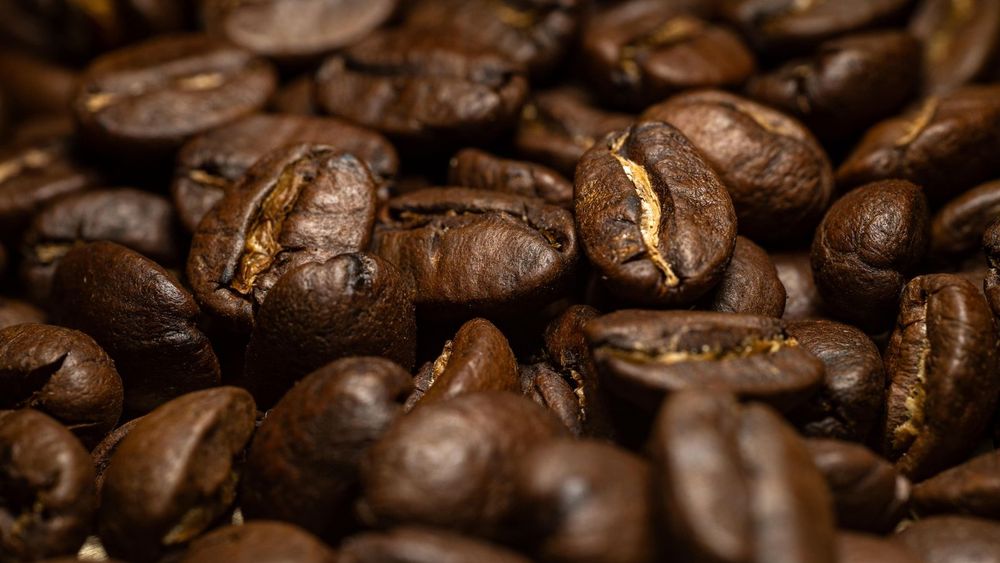
The short answer: According to Illy and Navarini (2011), about 9 bar acts on the coffee bed, not the 15 bar of the pump rating. According to the BfR, an espresso with 80 mg does not contain more caffeine per serving than 200 ml of filter coffee with 90 mg. On the fridge, water temperature and roast level, the sources disagree, and for the comparison of grinder and machine the evidence is missing altogether. Where we take a position, we say so.
| Assumption | What the sources say |
|---|---|
| More bar (15 or 20) makes better espresso | Manufacturers quote 15 bar for the pump, at the portafilter basket about 9 bar applies (Illy and Navarini, SCA survey) |
| Dark roast has more caffeine | The literature is divided, and the most common finding is no relationship (Lindsey et al. 2024) |
| Espresso has more caffeine than filter coffee | Not per serving, but yes per millilitre (BfR, coffee association) |
| Coffee does not belong in the fridge | Disputed: the coffee association’s FAQ recommends it, Liebherr and Siemens advise against |
| Crema proves quality | It depends on freshness and roast level and says little about taste (Illy and Navarini) |
| Coffee water has to boil | No source demands it generally, recommendations range from 80 °C to boiling, most give 88 to 96 °C |
| Robusta is inferior | It has its own quality standard (CQI), taste and caffeine differ |
| The expensive machine beats the grinder | We found no evidence for this, in either direction |
Do 15 or 20 bar make better espresso?
The packaging usually shows the pump figure, and manufacturers often say themselves that it is not the pressure at the portafilter basket. Sage advertises a 15 bar pump for the Barista Express and gives 9 bar for extraction on the same product page. For the Gaggia Classic UP it is 15 bar nominal and 9 bar during brewing, held by a fixed overpressure valve (OPV). De’Longhi writes of the Dedica EC685 that 15 bar is the pump pressure, not the pressure at the portafilter basket. What arrives there depends on the resistance of the coffee bed; for the Classic EM450 the same applies according to the instructions: finely ground and tamped coffee slows the water, coarse lets it through quickly.
None of the documents we checked says anything about 20 bar, and an “idle” setting does not appear in them either. Rancilio gives no pump pressure in bar at all for the Silvia. There, the pressure can be adjusted by a specialist with a screw by one turn at most.
For the pressure at the coffee grounds there are three independent figures. Illy and Navarini (Food Biophysics, 2011) describe espresso as made with water at 92 to 94 °C and 9 ± 2 bar. The earlier SCAA definition gave 9 to 10 atmospheres. In the 2017 barista survey the mean was 8.5 bar. Lelit gives 8 to 10 bar during extraction for the Victoria, with a 15 bar pump according to the instructions.
Our assessment: the 15 bar describe the pump, not the cup. For comparing two machines, the figure for extraction is the useful one, as the German review of the Sage Bambino Plus puts it (15 bar pump, 9 bar at extraction, both manufacturer figures). None of the sources we checked claims that higher pressure gives better espresso. Likewise, there is no evidence that PID, a heavy brass portafilter or strong steam power deliver “consistently better espresso”. Only manufacturer claims are documented, such as the Barista Express’s PID control to 93 °C, adjustable by 1 or 2 °C in advanced mode.
Does dark roast have more caffeine, or is it just “stronger”?
Both are less clear than they sound. Lindsey and colleagues (Scientific Reports, 2024) write that the influence of roast level on caffeine in the cup has been examined in more than 20 studies, with contradictory results. The most common finding is that caffeine content is independent of roast level; other studies found more in light, medium or dark roasts.
Their own measurement: two Ethiopian green coffees, five roast levels, three brew times (1, 2 and 10 minutes), AeroPress with a paper filter, 10 g of coffee to 150 g of water. The result was 134 to 165 mg of caffeine per 8 oz cup for the natural processed coffee and 145 to 165 mg for the washed one. With identical brewing conditions, dark roasts mostly had less caffeine in the drink than light and medium roasts. At identical extraction yield it was mostly the other way round. Two coffees and one brewing method: the study does not offer more than that.
What “strong” means is answered by the coffee association in its FAQ: lightly roasted coffee tastes milder, darker roasted coffee noticeably fuller. According to its brochure, the strength in the cup also depends on the dose; it calculates 6 to 8 g of ground coffee per cup. The measuring scoop is the undocumented part. In roasting, depending on the roast, 11 to 20 percent of weight is lost, and the beans almost double in volume (coffee association). From this it can be deduced that a scoop of dark beans weighs less, but that is our own calculation. We found no study that dosed by volume.
Does espresso have more caffeine than filter coffee?
Not per cup, but yes per millilitre. The BfR lists 90 mg per cup (200 ml) for filter coffee and 80 mg per cup (60 ml) for espresso, and notes that all figures are approximate values. The coffee association calculates lower: espresso (50 ml) 55 mg on average, machine-made filter coffee (150 ml) 80 mg, hand-brewed (150 ml) 115 mg, each with a wide spread (40 to 170 mg for the machine, 60 to 180 mg by hand, 50 to 60 mg for espresso).
We work out the concentration ourselves. According to the BfR, espresso has 1.33 mg per ml and filter coffee 0.45 mg, so roughly three times as much. The coffee association’s figures give 1.1 mg per ml for espresso against 0.53 (machine) and 0.77 mg (hand filter), which is 1.4 to 2.1 times as much. The two sources are far apart on concentration because they assume different portion sizes. EFSA (European Food Safety Authority) names the production process, the type of bean and the method of preparation as influences on caffeine content.
Two espressos in a row come to 160 mg according to the BfR, which is clearly above a cup of filter coffee. According to the coffee association it is 110 mg, more than from the filter machine and about as much as by hand. How much caffeine ends up in the cup therefore depends on the number of servings and on the dose. The label “espresso” or “filter” does not tell you.
Does coffee belong in the fridge?
Experts contradict each other here, which is why we do not write a flat no. The Deutscher Kaffeeverband recommends in its FAQ storing the opened pack airtight, for example in a resealable tin as additional outer packaging, in the fridge. Its brochure, by contrast, names only a light-proof, airtight container and does not mention the fridge.
Liebherr, itself a maker of refrigeration appliances, advises against it: the moisture that forms there could lead to mould, spoilage and loss of aroma. Siemens warns that beans absorb moisture, odours and flavours in the fridge or freezer. Lavazza and Mount Hagen also advise against it (more in our guide on bean basics), while the Amazon listing of the Gorilla Super Bar Crema recommends the fridge.
Research on ageing speaks for the cold. The SCA literature review by Emma Sage found in most studies that cooling and freezing slow the ageing reactions, while warm storage speeds them up. Gantner and colleagues (Foods, 2024) stored Arabica, Robusta and an 80/20 blend for one month at 5 or 20 °C. At 5 °C the profile of volatile compounds changed more slowly, and at 20 °C there were more earthy, sharp and smoky notes. That was 5 °C, not a fridge full of cheese. The objection about condensation when taking it out is plausible; we found no measurement on it for coffee. On freezing, the sources part ways: Liebherr considers the freezer suitable with an airtight container, Siemens advises “if possible never” to do it, and the coffee association does not mention it.
The shelf life of opened packs is also disputed. The coffee association says that after four weeks at the latest even a layperson tastes a change. Siemens gives 6 to 8 weeks without noticeable aroma loss for opened roasted beans and one week for opened ground coffee. The Q10 value, says the SCA review, is roughly twice as high for ground coffee as for whole beans, so it ages faster. We would use up a pack within the coffee association’s four weeks. Then the fridge question hardly arises, and that is our assessment, not a measurement.
Does crema prove quality?
The best source is the review paper by Illy and Navarini (2011). According to it, the gas phase of crema is predominantly carbon dioxide, which is formed during roasting. After 24 hours under ambient conditions the foam volume dropped markedly, and after 36 hours of storage only a foam persistence of 0.5 seconds remained. In that sense, thick crema reveals something about freshness. In the studies, however, the volume also rose with roast level, with dark roasted beans containing more CO2 than medium ones. Crema therefore depends on freshness and roast together.
On taste the authors are reserved. The rule of thumb asks for at least 10 percent crema of the espresso volume (“Foam Index”), and in the conclusion the foam is called the signature of a well-prepared espresso. The teaching that every mistake in grinding, brewing or extracting shows up immediately in the crema, however, rests on almost a hundred years of experience and not on reproducible measurements. Sensorially it is of little interest; pure crema tastes somewhat bitter and astringent.
The widespread addition that Robusta makes more and more stable crema does not hold. Illy and Navarini call the claim that Robusta is indispensable for a proper crema essentially refuted by more recent data. Nunes et al. (1997, as cited by Illy and Navarini) compared pure Arabica from Brazil with pure Robusta from Uganda: foam volume 1.2 to 3.5 mL against 1.4 to 3.9 mL, no significant difference. Blends of 20 parts Arabica and 80 parts Robusta foamed more in three laboratory studies, about 6.8 against 4.4 mL in Maetzu et al., but with lower persistence. “More crema” therefore applies only to very Robusta-rich blends, and “more stable” is not supported. The Schwiizer Schüümli Crema Mild is 100 percent Arabica and is still listed in our catalogue as a crema bean. Joerges describes the crema of the Gorilla as particularly stable and foamy; that is a manufacturer claim with no study behind it.
Does coffee water have to boil?
There is no general requirement, and we also found no measurement showing that 100 °C “over-extracts and makes it bitter”. The ranges from the sources:
| Source | Water temperature |
|---|---|
| Deutscher Kaffeeverband (brochure) | ideal 88 to 96 °C, not higher; for the French press, however, “with boiling water” |
| SCA Standard 310 | 90 to 96 °C, only as a standard condition for electric filter machines |
| Illy and Navarini (2011) | 92 to 94 °C for espresso |
| SCAA definition, barista survey 2017 | 195 to 205 °F (90.5 to 96.1 °C), survey mean 200.3 °F, around 93.5 °C |
| Bodum, Hario UK | around 92 to 96 °C (Bodum: instructions say only “hot, not boiling”) |
| AeroPress | 85 °C, 80 °C for dark roast, boiling water allowed |
| Lelit | 88 to 92 °C when brewing the espresso |
The picture is inconsistent. The coffee association justifies the upper limit of 96 °C by saying that boiling water can destroy aromas, but names no measurement. The only controlled tasting we found is Batali, Ristenpart and Guinard (Scientific Reports, 2020): for drip filter coffee between 87 and 93 °C, with grind and time adjusted for equal strength and yield, brewing temperature had no appreciable effect on the sensory profile. We know only the abstract, and the study says nothing about temperatures above 100 °C.
Our assessment: start at 92 to 96 °C if you can, because that is where manufacturers and the association meet. For the AeroPress the instructions apply (185 °F, so 85 °C, boiling water allowed), and for the Bodum Chambord the product page with around 92 to 96 degrees and the instructions with “hot, not boiling”. How long water needs after boiling to fall to these values, we could not document. It depends on quantity, vessel, lid and room temperature; a kettle with temperature selection spares you the guesswork.
Is Robusta inferior by default?
That it has its own quality scale already speaks against it. The Coffee Quality Institute runs a Q Robusta Grader programme, developed with the Ugandan coffee authority UCDA, which assesses according to the “Fine Robusta” standards and the cupping form (Guidebook v8, May 2024). It contains no score threshold; in retailer blogs we found contradictory figures from 80 to 82.
The coffee association compares the species in a table. Arabica contains 0.8 to 1.5 percent caffeine and 15 to 18 percent fat, Robusta 1.7 to 3.5 percent caffeine and 8 to 9 percent fat. Arabica accounts for around 57 and Robusta for around 43 percent of the world harvest. The association describes Arabica as a broad spectrum from sweet through acidic to spicy or fruity, and Robusta as bitter, earthy and harsh, traditionally in blends with a strong character. In the finished drink, according to Illy and Navarini, the difference is about a factor of two: the caffeine in Robusta drinks is about twice as high, the lipids in Arabica drinks about twice as high.
You cannot always see whether a blend contains Robusta. For the Crema d’Oro, Dallmayr names Arabica and Canephora, which is the botanical name of Robusta. According to the Amazon catalogue, Gimoka gives 50 to 50 for the Armonioso. For the Gorilla Super Bar Crema, 80 to 20 appears only in the Amazon listing, Joerges names no ratio, and Caffè Mauro gives none for the Avvolgente. The 360 Rundum Ehrlich Bio Honduras carries the statement 100 percent Arabica. A pure Arabica is therefore recognisable, but for blends the percentage is often missing.
Does the expensive machine beat the grinder?
We found no evidence for this, in either direction. That is why we do not present the sentence as fact, only as an assessment.
Some pieces are documented. The coffee association writes that the grind should be set according to the method of preparation and the roast, and that the finer the grind, the more aroma compounds dissolve during brewing. It also says that grinding releases volatile aromas and a large part of the carbon monoxide and carbon dioxide, so ground coffee loses aroma sooner than beans. The SCA review supports this with the Q10 value we mentioned above under the fridge. How quickly powder loses aroma is not given in days in any source we checked; Siemens gives one week for opened ground coffee, as a manufacturer claim.
Does it follow that the grinder matters more? We would say: it is the part of the budget that is easy to forget. Anyone buying beans needs a grinder with an adjustable grind size, and for espresso what counts is how finely it can be adjusted. How much better a combination becomes, nobody we could read has documented. How you then find the right grind size is covered in the guide Setting your grind size.
Water, hardness and descaler
The coffee association writes that around 98 percent of the finished coffee is water, that minerals are important carriers of flavour, and that hard, limescale-containing or chlorinated water should be avoided by filtering. It gives no figures for this. Wellinger (ZHAW, in an SCA magazine) puts alkalinity ahead of pH: perceived acidity corresponds to the extracted acids minus the alkalinity of the water. That soft water makes coffee “flat” and hard water “dull” is stated in none of the sources we checked. More on hardness and limescale is in our guide on water hardness and coffee.
For descaling there is no general rule, only the instructions for the device. In its FAQ, Nivona expressly forbids citric acid, vinegar and formic acid because they destroy the sealing rings, and recommends liquid descaler. For the Classic E24, Gaggia prescribes only its own descaler, never vinegar or other agents. For the aluminium Moka Express, Bialetti demands exactly the opposite: two teaspoons of citric acid or vinegar in the water and one run without coffee. None of these sources supports the claim that vinegar attacks aluminium. Descalers from our German reviews differ in the active ingredient: the Durgol Swiss Espresso contains sulphamic acid, the De’Longhi EcoDecalk lactic acid. The right procedure for your device is covered in our guide on descaling and cleaning.
What to take from the myths when buying
With portafilter machines, compare the figure for extraction, not the pump figure, and check whether the manufacturer gives one at all. Rancilio does not for the Silvia. For temperature, Sage’s documents say 93 °C, and Lelit’s 88 to 92 °C when brewing.
With grinders, step size counts, and the German reviews document it. The Baratza Encore ESP has 40 click steps, of which 1 to 20 are finely stepped for espresso and 21 to 40 for filter through to cold brew, without a timer. The Sage Smart Grinder Pro has 60 steps and a timer that stores the grind time per number of shots and cups. The Eureka Mignon Specialità adjusts steplessly via the lower burr (55 mm flat burrs, 300 g bean hopper). The Comandante C40 MK4 is a hand grinder with a Nitro Rex conical burr.
With beans, the pack states what can be checked: variety and roast level.