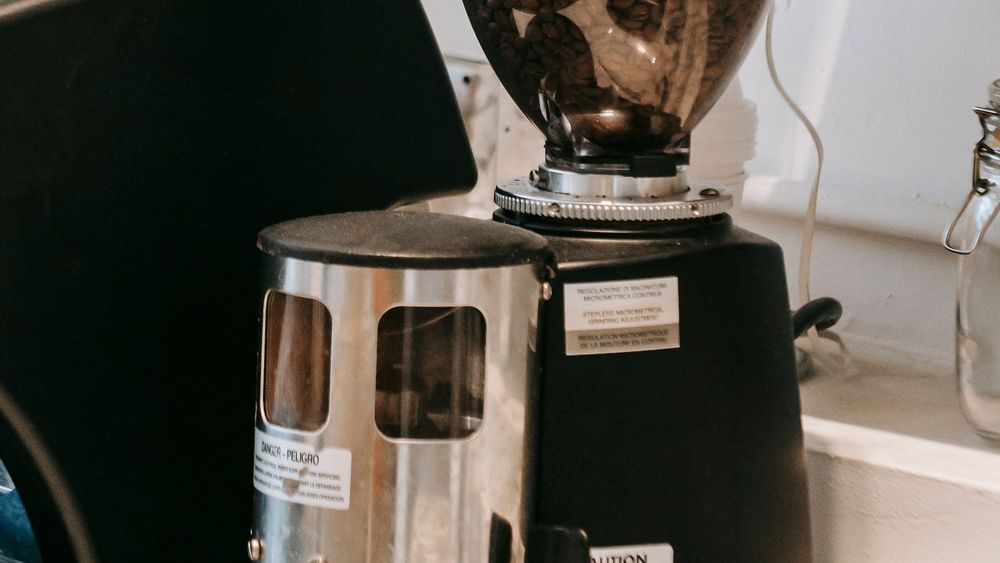
The short answer: As a rule of thumb for the first step: if the coffee tastes sour, too little was probably dissolved; if it tastes bitter, probably too much was dissolved or it is too strong. In the manual for the AromaFresh X, Melitta writes that coffee ground too fine turns bitter and coffee ground too coarse turns sour. That is a direction and not a law: in a series of measurements at UC Davis (Batali et al. 2020, filter coffee, one bean), bitterness followed brew strength and not extraction yield. Change only one variable per brew.
How do you recognise sour and bitter?
The Sensory Lexicon 2.0 from World Coffee Research (2017) defines “sour” as the taste impression of a citric acid solution and “bitter” as that of a caffeine solution. As references it gives 0.015 per cent citric acid for intensity 1.5 and 0.05 per cent for 3.5, and for caffeine 0.01 per cent for 2.0 and 0.05 per cent for 6.5. If you want to tell the two impressions apart, that gives you an anchor that does not depend on how you feel on the day.
A common rule says acidity arrives immediately and bitterness only at the back and lingers. The lexicon defines by solution, not by the moment in the mouth, and we found no other source for the time course. We therefore do not sort by it.
Thin is something else again. The new Brewing Control Chart by Guinard et al. (2023, Journal of Food Science) expects acidity, citrus and red-fruit notes at high brew strength and low extraction yield. A watery coffee without a sour peak, by contrast, has a low brew strength, and that is a different fault with a different remedy. We would drink the sample black, without sugar, so that nothing gets in the way.
The procedure: one variable per brew
Changing only one thing at a time helps, because otherwise you do not know which change worked.
- Name the impression: sour, bitter, thin or flat. The remedies point in different directions, and with a vague “tastes odd” you cannot choose one.
- Write down dose, water quantity, grind setting, time and temperature. Without a note there is nothing to compare against.
- Change one thing. Usually that is one step on the grinder, because manufacturers and Stiftung Warentest name it as the first step.
- Taste the new cup next to the old one, from the same vessel.
- If it got worse, turn the other way on the next brew. If it stayed the same, the step was too small.
- As soon as it suits you, record all the values.
We do not know how many rounds this takes, and a number for it would be invented. After switching beans you start again at step 1: Baratza, Fellow and Severin explicitly name the roast level as a reason to move the setting, with a darker roast ground coarser. Everything else about adjusting is in the guide Setting the grind size.
Why the rule of thumb only shows a direction
The classic Brewing Control Chart (Lockhart 1957, Lingle 2011) sorts coffee by two quantities. Brew strength (TDS) says how many dissolved solids are in the drink, and extraction yield (PE) says what percentage of the ground coffee has moved into the drink. As the ideal zone, the chart gives, as Batali et al. reproduce it, about 1.15 to 1.35 per cent TDS and 18 to 22 per cent yield. The ends of the yield axis are labelled “underdeveloped” and “bitter”. The equation sour equals under-extracted, bitter equals over-extracted comes from this. The terms themselves are a reading of the chart; the study does not use them.
Measurements paint a more precise picture. Batali, Ristenpart and Guinard (2020, Scientific Reports 10, 16450) brewed 270 batches in 27 sample types, and twelve trained assessors rated them. Bitter, astringent, viscous, rubbery and earthy rose linearly with brew strength, with no significant correlation with yield. Sour, citrus and berry rose with brew strength and fell as yield rose. The limits: an Arabica from Marcala (Honduras), one roast, one programmable filter machine.
Frost, Ristenpart and Guinard (2020) repeated this with light, medium and dark roasts. Bitter, sour and sweet responded significantly to strength and yield in all three, and sweetness fell as brew strength rose. Guinard et al. (2023) summarised three UC Davis studies with 32,076 sensory ratings: bitterness, astringency and roast notes occur at high strength and high yield. Two consumer groups liked different things here, with 57 per cent in group 1 preferring low strength at low to medium yield.
Our assessment: as a first direction the rule of thumb is useful, because manufacturers and Stiftung Warentest share it. As a law of nature it is not correct. Someone who tastes bitter may have coffee that is too strong rather than too much yield, and those are two different problems.
A neighbouring myth is the order in which acids, sweetness and bitter compounds are supposed to dissolve. Batali et al. (2020, Journal of the Science of Food and Agriculture 100) caught a filter brew in a new pot every 30 seconds: the assessors rated the early fractions as more bitter and more sour, and the late ones as sweeter and more floral, even though these contained fewer dissolved solids. Blumberg, Frank and Hofmann (2010) found that monocaffeoylquinides dissolve quickly, dicaffeoylquinides more slowly, and that the vinylcatechol oligomers stay strongly attached to the grounds. The groups of compounds therefore behave differently, and “what comes last is bitter” does not hold across the board.
Grounds, grinder and brewing time
That small particles release their soluble compounds faster is documented. Uman et al. (2016, Scientific Reports 6, 24483) measured coffee from a Mahlkönig EK 43 by laser diffraction, without assessing taste. The authors leave open whether an ideal distribution exists. What they measured: the particles range from about 0.1 to 1000 micrometres, the distribution has two peaks, and the fines carry most of the surface area.
From this people like to conclude that fines supply the bitterness and coarse chunks the acidity, both at once in one cup. As a mechanism that is conceivable. As a finding we did not find it. Smrke, Eiermann and Yeretzian (2024, Scientific Reports 14, 5612) added sieved fines under 100 micrometres to an espresso bean (Arabica from Costa Rica, 20 g coffee, 40 g drink, 9 bar). The coffee bed became less permeable and the shot took longer, but the authors observed no downgrade in the sensory scores. Two samples with added fines were among the best rated. A single Q-Grader judged flavour, balance and tactile, not bitter and sour, and the authors themselves say it was not a systematic double-blind assessment.
With espresso there is also unevenness in the bed. Cameron et al. (2020, Matter 2) found uneven flow through the bed at fine grind sizes and a maximum of the extraction yield instead of a steady rise: very fine as well as very coarse settings gave lower yields. On a machine set to 9 bar, the bed clogged at fine grind sizes, and the authors lowered it to 6 bar. Lee, Smith and Arshad (2023, Physics of Fluids 35) model, in a simplified two-path model without measurements on the coffee puck, how an initial difference in permeability grows through flow and extraction until one path is leached out.
What does this say about the grinder design? In issue 12/2019, Stiftung Warentest examined fifteen coffee grinders, nine with a grinding mechanism and six with a blade. There were good results in all design groups. Blades smash the beans, while cones and discs crush them in the gap, and blade grinders are handy for occasional use but the same result is hard to repeat. Burr grinders, once set, delivered the same grind size every day. That refers to the repeatability of the setting; a measurement of particle uniformity is not in the freely readable part of the report. For espresso, the magazine describes the consequences like this: powder that is too fine drips too slowly and over-extracts; with grinding that is too coarse the water runs through so fast that it dissolves too few aroma compounds, the espresso turns sour and pale, and the crema disappears quickly.
And the dull burrs? Griffiths, Adams and Rees (2018) observed deviations in the particle distribution caused by disc wear on a commercial grind-on-demand grinder. Manufacturers give service lives in kilograms: 1Zpresso up to 100 to 200 kg, and Eureka recommends checking the burrs every 250 kg, with a lifetime of 300 kg. If you grind 20 g a day, that comes to 7.3 kg a year and about 34 years to reach 250 kg (our own calculation). As an obvious explanation for a change in taste in a household, dull burrs are therefore hardly plausible.
The numbers by brewing method
For almost every method, different bodies give different values. The table shows who says what and on what basis.
| Method | Figure | Source |
|---|---|---|
| Household filter machine | 55 g coffee per kg water, 1.15 to 1.55 % TDS, 90 to 96 degrees in the coffee bed, no brewing time | SCA Standard 310-2021, conditions for certification, does not apply to pour-over, French press, espresso, capsule |
| Filter machine, ECBC criteria | 60 g/l, 4 to 6 minutes, 92 to 96 degrees | Manufacturer statement from Moccamaster USA on the ECBC criteria; Melitta gives the same 92 to 96 degrees and 4 to 6 minutes |
| Filter coffee, measured brewing time | 8 to 12 minutes for 15 machines | Stiftung Warentest, issue 11/2024, aroma not rated |
| Filter coffee, association statement | 88 to 95 degrees, not above; website: 7 to 10 g per cup (125 to 150 ml) | Deutscher Kaffeeverband; its brochure gives 88 to 96 degrees, approx. 65 g/l, 3 to 5 minutes |
| Pour-over V60 | medium-fine, 15 g to 250 ml, 92 to 96 degrees, about 2.5 minutes | Hario UK, V60 Expert |
| French press | water about 92 to 96 degrees, at least 4 minutes, hot and not boiling water | Bodum, Chambord |
| French press, Espro | 195 to 205 °F (about 91 to 96 degrees), 3 to 6 minutes, if too bitter, steep for less time | Espro |
| AeroPress | 85 degrees (80 for dark roast), boiling water without temperature control; 16 to 18 g, stir for 3 seconds, wait 60 seconds (30 for medium-fine) | AeroPress Inc., Signature Brew |
| Espresso | on average 8.5 bar (most common value 9), about 93.5 degrees, 36.5 g drink, ratio on average 1:2; for 51 %, 25 to 30 seconds | Survey by the Barista Guild of America with SCA Research, 275 participants, 2017 |
| Moka pot | medium heat setting, never the highest; moka grind; take the pot off the heat when the top part is full of coffee; no time given | Bialetti, instructions for the Moka Express |
| Cold brew | usually 8 to 24 hours | Fuller and Rao (2017), introduction |
The espresso row reflects a survey; the earlier SCAA definition (7 to 9 g, 25 to 35 ml, 20 to 30 seconds) does not fit practice today with 18 to 20 g. For the AeroPress, a range of “80 to 90 degrees” does not match the manufacturer: AeroPress does not name an upper limit of 90 degrees.
On temperature the recommendations differ most, from 80 degrees for the AeroPress (dark roast, 85 in the standard recipe) to 96 degrees for SCA, Hario and Bodum. In between are the Kaffeeverband with 88 to 95 degrees and Lelit with 88 to 92 degrees for espresso. For filter and French press we would start in the range of 92 to 96 degrees, because most of the bodies named agree there.
For taste, temperature is less of a lever than the numbers suggest. With brew strength and yield held constant (the authors adjusted grind size and flow time), 87, 90 and 93 degrees did not noticeably change the sensory profile according to Batali et al. (2020). That does not mean temperature has no effect: with the same grind size and the same time, hotter water dissolves more and thereby shifts strength and yield (our inference). The study applies to drip filter at 87 to 93 degrees; for 100 degrees and for immersion it says nothing.
Fault patterns
The table lists only causes that a source supports or that follow cleanly from the mechanism.
| Impression | Possible cause | One change | Evidence |
|---|---|---|---|
| Sour | too little dissolved: too coarse, too short, too cool | one step finer | Melitta and Fellow (manuals); Stiftung Warentest 12/2019 for espresso |
| Bitter | too much or too strongly dissolved: too fine, too long | one step coarser, steep for less time | Melitta, Fellow, Stiftung Warentest; Espro recommends steeping for less time if too bitter |
| Thin, without a sour peak | low brew strength | check the ratio: in immersion it determines strength | Guinard et al. 2023; Liang et al. 2021 |
| Bitter from the moka pot | temperature too high | medium heat setting | Milu (proidee): temperatures that are too high burn the coffee and lead to a bitter aftertaste |
| Coffee from the hot plate tastes different | keeping warm | pour off earlier | Stiftung Warentest 2014: more sour; Kaffeeverband and Melitta: can turn bitter |
| Different after switching beans | a different roast level shifts the right setting | adjust the setting | Baratza, Fellow, Severin: darker roast coarser |
| Flat or sour after a change of water | different alkalinity | check the water | Rune et al. 2026; SCAE Water Chart |
Where the cause lies in the machine or in maintenance, you will find it in the next section.
Causes beyond grind size and dose
Water first, because hardness and alkalinity get confused here. Rune et al. (2026, Journal of Food Science 91) brewed Colombian medium-roast coffee in the French press (50 g in 900 g water, 92 degrees, 4 minutes) with ultrapure water to which they added calcium, magnesium and bicarbonate. Hardness alone produced no conspicuous differences, whereas bicarbonate did. For calcium, only the lowest level of 15 mg/l was significant, with no recognisable dose-response pattern. The SCAE water recommendation gives 50 to 175 ppm hardness and 40 to 75 ppm alkalinity as the core zone, on thin data. Wellinger (SCA 25 Magazine, issue 9) writes that perceived acidity corresponds to the extracted acids minus the alkalinity of the water. Older work (Lockhart 1955, Pangborn 1971, read only via the introduction of Rune et al.) found distilled water too sour and water rich in carbonate flat and bitter. The Deutscher Kaffeeverband counts hard, limescale-rich and chlorinated water among the factors with a negative effect. The Umweltbundesamt (German Environment Agency) regards tap water, regardless of hardness, as drinking water of the best quality: that says something about drinking water and nothing about coffee. There is more on this in the guide on water hardness and coffee.
For the age of the bean, the picture is thin. Smrke et al. (2018) show that CO2 release from roasting to the cup is an indicator of freshness: part of the gas stays in the porous structure, escapes slowly during storage and abruptly during grinding and extraction. That freshly roasted beans taste sour in espresso, we find only in roaster blogs with resting times between 5 and 21 days, in no peer-reviewed measurement. On the other side is rancidity. It arises from lipid breakdown and is accelerated by moisture, oxygen, heat and a large surface area; trained assessors detected it in coffee packed in air after four months (SCAA overview from 2012, there Marin et al. 2008). That concerns packaged coffee. Whether rancid oils in the brew group, sieve or grinder change the taste has not been measured; manufacturers such as Groenenberg only note in their care instructions that residues can turn rancid. Cleaning does no harm anyway, and how to do it for grinders is covered in the guide on cleaning a coffee grinder. For filter coffee, you will find the other variables in the guide Making filter coffee.
On keeping warm, the sources contradict each other. In 2014 Stiftung Warentest wrote that coffee should not stand on a low heat for longer than half an hour, that it gets more and more sour over time, without a measured value. Batali et al. (2023, Journal of the Science of Food and Agriculture 103) kept filter coffee warm for 15 minutes to 3 hours, in a glass pot on a hot plate, a pot with a heating jacket and a vacuum-insulated pot. Acidity rose in light and medium roasts; the dark roast was more sour in the chemical measurement but was not perceived that way. More attributes decreased than increased, and 93 industry professionals did not prefer the fresh coffee (30 minutes) over the one after 180 minutes. The abstract does not report bitterness, while Kaffeeverband and Melitta write that keeping warm can make the coffee bitter, without a measurement. For the pots, the differences were present for light and dark and hardly for medium, which is why “a thermal carafe prevents this completely” is not supported.
When bitterness is not a fault
Roasting determines which bitter compounds arrive in the cup. Blumberg et al. (2010, Journal of Agricultural and Food Chemistry 58) brewed coffee from beans of different roasts: light to medium roasting forms the quinides responsible for the typical bitterness of coffee, while stronger roasting breaks them down into sharper-tasting 4-vinylcatechol oligomers. That supports the idea that a dark roast is naturally more bitter.
On acidity, two single studies from 2024 show a maximum of titratable acidity at first crack, which falls back to the starting value by second crack (Anokye-Bempah et al.), and a pH low point of the extract at a medium roast (Kim et al.). The US procurement specification A-A-20213B of the Department of Agriculture (2004) describes dark roast (Agtron 30 to 40) with pronounced bitterness and medium (Agtron 50 to 60) with a stronger flavour. It is a US specification, and the level names used by roasters do not match it.
The variety counts too. The Kaffeeverband describes Arabica as a broad flavour spectrum from sweet through sour to fruity, and Robusta as bitter, earthy and harsh. A bitterness that belongs to the roast or variety cannot be fixed at the grinder. The guide on bean basics helps here.
What remains open
Several gaps appear in the sections above only in passing; here they are gathered together. On the order in which acids, sweetness and bitter compounds dissolve, we found no primary source, and we know the filter study by Batali et al. (2020) and the one by Blumberg et al. (2010) only from the abstract. That fines make things bitter and coarse particles make them sour counts as a mechanism but has not been measured in sensory terms, and that “astringent and furry” comes from channelling is not shown by any of the papers; in Batali, astringency follows brew strength. No primary study we found names a temperature above which water is too hot. There is no source for the advice to let boiling water stand for a minute, and how fast water cools depends on the vessel and the quantity. On roasting, the two studies from 2024 do not show whether a bean bought as light brings less acidity one level darker.
Which device helps with which fault pattern?
A grinder does not solve preparation errors, but it determines how finely you can correct. The Melitta AromaFresh X has eleven grind settings with fixed detents and a ceramic grinding mechanism, not a blade. According to the quick-start guide, the Fellow Opus advises slightly finer for sour, slightly coarser for bitter and a higher number for a darker roast. The Baratza Encore ESP is an electric conical burr grinder with 40 mm cones of M2 steel and 40 detent steps, 1 to 20 for espresso and 21 to 40 from filter to cold brew. According to the manual, steps 1 to 20 change the grind size only slightly, which speaks for small corrections on espresso. The burrs must not get wet.
For devices that limit the time, the lever lies elsewhere. With the Espro P3, according to the manual, extraction ends when the filter is pressed down, and Espro gives 195 to 205 °F. With the AeroPress Go, the plunger ends the flow-through; depending on grind size, AeroPress reckons on 30 to 60 seconds of steeping time and on 80 degrees for dark roasts and 85 degrees for medium and light roasts. The Moccamaster KBG Select brews at 92 to 96 degrees according to the manufacturer, and the coffee arrives in the pot at 82 to 85 degrees.
The Bialetti Moka Express has no variable apart from the heat. The instructions say never to use the highest heat setting, with gas the flame must not reach beyond the boiler, and the pot belongs off the heat when the top part is full of coffee. “Gurgling” as a signal is not mentioned there. Bialetti rules out the dishwasher, hand washing only, to preserve the properties of the pot over a long time. Alkaline cleaners attack uncoated aluminium (general materials knowledge, not from Bialetti).