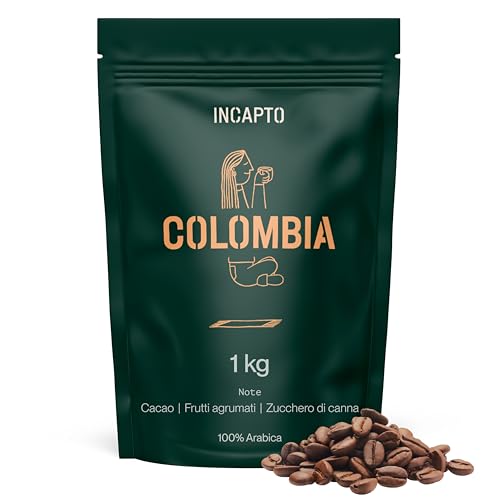
One kilo of whole beans, 100 per cent Arabica, single-origin from the Honduran highlands. The Amazon.de catalogue listed this pack at €35.59 on 6 September 2026. That is not cheap: only a single kilo in our coffee bean comparison costs more, the Incapto Single Origin Kolumbien at €35.95. What sets this bean apart is not a taste claim but the amount of information the seller publishes about growing, processing and roasting. Behind the brand stands Dr. Engling & Siemers GbR from Ziethen, run by Dr. Jan Engling and Maik Siemers.
Honduran highlands, above 1,300 metres
According to the seller, the green coffee grows at an altitude above 1,300 metres, protected by shade trees, and ripens slowly there. Cooler high altitudes tend to go with later ripening and denser beans: in Ethiopia, harvest at high altitude came on average about 50 days later, and bean density was highest in the highlands. The guide Coffee origin and flavour puts these studies in context, together with a measurement from Costa Rica showing that shade also delays ripening, and it calls altitude a tendency, not a guarantee of a particular cup. For roasting, density matters most: dense beans withstand heat for longer, and that is exactly what a profile that wants to roast long and mild needs.
Harvesting is done exclusively by hand, and processing is washed. Washed means: the fruit pulp comes off shortly after harvest, the remaining mucilage layer dissolves in fermentation, and only then does the bean dry in its parchment. This costs water and effort, but according to a single study it gives a cleaner and less sweet cup than dry processing. Washed beans also contain less glucose and fructose: both decrease in wet processing, in the researchers’ view through the metabolism of the seed itself. The seller justifies the route with speed and selection: it is faster, and inferior beans drop out along the way. For drying, the brand’s coffee page mentions drying beds and, at times, drying fans, with two conditions: do not layer too high, turn constantly.
The cooperative is organic and Fairtrade certified and completely avoids mineral fertilisers and pesticides, the seller writes. Part of the additional revenue is said to fund projects for education, health and environmental protection in the growing region.
What does low acid mean here?
Long and gentle roasting is how the seller describes its profile. The roast further reduces the coffee’s acidity, it writes, and it presents low acidity as a property of the product. The Amazon catalogue text calls the method long-time drum roasting.
Technically, what lies behind this is the breakdown of chlorogenic acids. They make up a large part of the acidity in green coffee and break down with rising roasting temperature and roasting time. Without a measured value it remains the roaster’s assurance, but the technical logic behind it holds: a long roast brings less acid out of the drum and, in doing so, costs part of the fruity notes for which highland coffee is otherwise bought.
It is striking that growing altitude and washed processing point in the opposite direction. Both are considered acid-forward: cool altitudes go with more acidity in studies, in Ethiopia however only under shade, which according to the seller this bean has, and washed coffee showed the strongest acidity and the lowest body in an espresso study. So the roast profile works against two properties of the raw material that the brand chose itself.
Low acid does not mean thin, though. Acidity and body are two different quantities: the breakdown of chlorogenic acids takes acid out of the coffee, not the dissolved solids that provide body in the cup. As a result, the seller names roast aromas with a hint of dark chocolate and caramel.
Roasted in batches of 15 kilos
Roasting takes place at the Lebenshilfewerk Hagenow, which runs its coffee under the name Kaffee Sophie. People with mental and physical disabilities work there together with coffee professionals at the drum, and every step up to packing is done by hand according to the brand.
The seller gives 15 kilos per roast as the batch size, justified by roast freshness and roast quality. A small batch can be controlled more tightly than a large one: the drum cools less when charged, and the temperature curve stays more comparable from one run to the next. If the seller means the charge weight, less comes out of the drum, because the coffee loses water during roasting, and roasting has to happen correspondingly often.
The seller calls these workplaces responsible and varied. Handwork up to packing costs more than a filling line, and that explains part of the kilo price.
Organic number, Fairtrade and the lab samples
The product page of the kilo pack shows the organic control body number DE-ÖKO-005, plus the note non-EU agriculture. The Amazon bullet point gives the same number without this note. The legal notice of the same website, by contrast, says DE-ÖKO 009. The number names the body that inspects the business, and both can be correct if roaster and distribution are certified separately. Which body inspects the kilo pack therefore remains open. If the label is your reason to buy, have the number confirmed before you order.
The brand relates the word Fairtrade to its cooperative: it is organic and Fairtrade certified, the seller writes. Certificate number and certifying organisation are not given, so it remains a statement about the supplier. The seller shows no Fairtrade label with a number, neither on the product page nor in the Amazon catalogue; as certification it lists there only the organic control number DE-ÖKO-005.
Every harvest is said to be analysed several times in a German food laboratory for contaminants and mycotoxins, and the results are said to lie below the detection limit, so not merely below the limit values but below what a laboratory can display at all. How sensitive this limit is depends on the measuring method and the laboratory. Mycotoxins are metabolic products of moulds that form in green coffee when it is stored too damp or too densely. That closes the circle with drying: layering thinly and turning constantly keeps exactly these moulds down. The most important one in coffee is ochratoxin A, for which the EU has set a maximum level.
Price, pack and what the cup costs
The catalogue entry for the price of 6 September 2026 includes the product group Grocery, the model number Kaffee 1kg and the entry single pack. The weight field there reads 2.20462262 pounds, which corresponds exactly to the stated 1,000 grams. In the brand’s shop the same pack costs €39.99. Via Amazon you therefore pay €4.40 less than from the manufacturer itself. The seller also advertises a satisfaction guarantee in the catalogue text: if you are not satisfied, you get the purchase price back.
Calculate with 8 grams for a cup of filter coffee, and one kilo lasts for about 125 cups, with each cup costing you around 28 cents. The brew calculator works out what suits your pot.
In the coffee bean comparison, kilo prices range from €13.63 for the Gimoka Classico to €35.95 for the Incapto Single Origin Kolumbien, and this product, at €35.59, sits just below. You pay a good two and a half times the cheapest bean for organic cultivation, hand picking, lab samples and the small batch size. These are cost drivers that the seller names itself, and they explain the price. Whether they are worth it to you is your decision.
The seller calls the packaging an eco aroma-protection pack, and according to the Amazon catalogue it manages without aluminium. Inside there is still a thin plastic film so that the bag does not turn oily and the aroma stays; the brand says so itself. It says it is still working on a fully compostable solution. We would close the bag tightly after every use and keep it cool, dark and dry, and not in the fridge, because the beans draw moisture there when opened.
What the manufacturer does not state
You learn a lot about growing and roasting location, and little that can be measured. We found none of the following details on the manufacturer’s website or in the Amazon catalogue on 6 September 2026.
- a roast level as a step or on an intensity scale, as the big brands give it
- roast date, best-before date and a deadline by which an opened bag should be used up
- a storage note on the product page
- grind size and dosing for filter, bean-to-cup machine or portafilter machine
- the coffee variety, the harvest year and a lot number
- name, place and region of the cooperative in Honduras
- laboratory name, test date and measured values of the contaminant and mycotoxin analyses
- a pH value, a titratable acidity or a caffeine content
- nutritional values per 100 grams or per cup
- an SCA score or another cupping score
- the packaging material in detail, with or without an aroma valve
- the legal form of employment at the Lebenshilfewerk Hagenow
- terms and deadlines of the satisfaction guarantee from the catalogue text
- whether the kilo pack contains the same roast as the 250 and 500 gram bags
In our view the missing roast date weighs heaviest, because roast freshness is the brand’s argument for the small batch. A published roast date would make this assurance verifiable, and such a detail is not expensive to provide.
Three other beans that come into question
| Bean | Roast and origin | Price per kg | Our score | Choose this one if |
|---|---|---|---|---|
| 360° Rundum Ehrlich Bio Honduras (this one) | Long drum roast, low acid, 100 % Arabica from the Honduran highlands | approx. €35.59 | 9.3 | documented origin, organic cultivation and the roasting at the Lebenshilfewerk are worth the premium to you |
| Incapto Single Origin Kolumbien | Medium roast, Huila region, producer Cadefihuila, 84 SCA points according to the manufacturer | approx. €35.95 | 9.0 | you mostly pull espresso and find a quality figure you can look up more important than an organic label |
| J. Hornig Caffè Crema Bio | Caffè Crema roast of Arabica and Robusta, strength 4 of 5 according to the manufacturer, organic | approx. €30.99 | 8.4 | your bean-to-cup machine makes milk drinks every day and the coffee should hold its own against the milk |
| Mount Hagen Espresso Bio | Dark espresso roast, 100 % Arabica from Papua New Guinea, Peru and Ethiopia, organic, Fairtrade and Naturland according to the manufacturer | approx. €23.01 | 8.6 | a blend from three countries with labels is enough for you and you do not want to spend just over €12 more per kilo for an origin from a single country |
Of the three alternatives, only the J. Hornig and the Mount Hagen are labelled organic; for the Incapto there is a points rating from the manufacturer instead. What the table is not good for: it says nothing about which of the four beans you will like. The scores are our editorial assessment based on manufacturer details, catalogue data and price, and the prices are catalogue figures from September 2026, which change without warning.
Which brewing method this bean suits
The seller names bean-to-cup machine, portafilter machine, pour-over and French press, and the catalogue text lists filter coffee as well. That is a clearance for pretty much everything in a kitchen, and with a whole bean it is also plausible.
Pour-over is the closest fit. A long, low-acid roasted single-origin shows there what the roast profile has made of the highland coffee, without pressure or milk covering anything. If you look for light, acid-forward filter coffees, you are in the wrong place here, because that is exactly the acidity the profile takes out.
In the French press you work with a coarse grind and around four minutes of contact time, and because there is no paper in between, oils and fine particles stay in the cup. That suits a darker-led roast better than a light one, where fruit acidity quickly turns sharp without filter paper.
In a bean-to-cup machine the bean works if you drink it black or with little milk. If several cappuccinos a day are added, pure Arabica holds its own against milk less well than a blend with a Robusta share, and for that our catalogue has the J. Hornig Caffè Crema Bio with its strength rating of 4 of 5.
For the portafilter machine you set everything yourself, and the list further up tells you which reference points are missing. With a low-acid, long-roasted profile, start somewhat coarser than with a light roast: longer-roasted beans are more brittle and extract faster, so a grind that is too fine pulls the cup too far and tips it into bitterness before the time is right.
Who the bean suits and who it does not
A kilo is a lot of coffee. At two filter cups a day you are busy with it for around two months, at six the bag is empty after three weeks, and then a good €51 a month stands on the bill for beans alone. At this consumption the kilo price hits fully, and the table further up shows where organic starts cheaper in our catalogue.
It suits you if the bean’s path matters more to you than a figure to hold on to, and if the kilo price fits your budget without you having to calculate. It also suits you if you drink black and the acidity of previous beans bothered you: less acidity is the declared aim of this roast profile.
In our four individual scores, value for money falls behind at 7.9, with build quality and performance at 9.4 and 9.3 and handling at 8.6. The 8.6 comes from the fact that with this bean you set grind size and dose yourself and that a kilo sits in a single bag that you keep open over weeks. If you do not like decisions in the morning, you are better off with a bean that has an intensity figure, accepting the thinner origin information.