Ten capsule machines in our catalogue, eight of them here
Our capsule and pod machine category lists ten machines with a review of their own. The eight highest scores run from 9.3 to 8.0, and the two below them are at the end of the page. The order is by overall score alone. That the brand decides nothing can be counted: Nespresso accounts for four of the ten models and three of the eight places, Senseo two and two, Tassimo two and one, Sage and Tchibo one each and one each.
None of these machines has had a capsule, pod or T DISC put into it on our side, we have not filled a milk container or an Aeroccino, and nobody here has drunk from a cup made on any of them. How the coffee turns out is therefore not stated anywhere on this page, not even by hint. What this page says about a machine comes from its review, and there from the manufacturers’ product pages, instruction manuals and safety instructions: Sage, De’Longhi and Nespresso, for the two Vertuo machines additionally Krups, for the Senseo machines Philips and Versuni, plus Tchibo and Bosch. We cross-read against the Amazon catalogue data.
All ten reviews in this category have since been rewritten and rest on the manufacturers’ documents, since 24 September 2026 including that of the Tassimo Happy.
The overall score is our editorial assessment. Each review sets four sub-scores beside it, from build quality to value for money. Nobody measured anything for this, and we do not present a calculation that turns the four scores into the overall figure. Two machines are level, the Senseo Original Plus and the Senseo Switch, with 8.5 points each. Where scores are level we order alphabetically, so places 4 and 5 are equal. Prices vary far more than scores: €430.99 separates approx. €489.99 for the Creatista Plus from approx. €59.00 for the My Way 2, a good eight times as much. The machine prices on this page are guide values from our price boxes (on Amazon.de) and not daily prices; where a capsule price is given, it carries its own date.
Five portion formats, and you buy one of them for years
Eight machines, five formats. Nespresso Original is drawn by the Sage Creatista Plus and the Nespresso CitiZ with Aeroccino, Nespresso Vertuo by the Vertuo Next and the Vertuo Pop, Senseo pods by the two Senseo models, Tchibo Cafissimo by the Cafissimo Milk and Tassimo T DISC by the My Way 2.
Technically, more than the shape of the portion separates these formats. With Nespresso Original, the capsule stays still and a pump forces water through it; Sage’s manual and De’Longhi’s data sheet each give 19 bar for this, while Tchibo’s technical data say max. 15 bar. Both figures describe what the pump can manage at most, not what arrives at the ground coffee during the brew. With Vertuo, the capsule spins instead: Nespresso calls the process Centrifusion and puts the speed for the Vertuo Next at up to 7,000 revolutions per minute, and the centrifugal force drives the water from the inside outwards through the ground coffee. Nespresso gives no pressure in bar anywhere for this design, and Bosch publishes none for the My Way 2 either. So five of these eight machines carry a bar figure, three do not. The situation is thinner still for temperature: for seven of the eight, the reviews expressly record that the manufacturer gives no brewing temperature in degrees, and Bosch gives no figure in degrees for the three temperature levels of the My Way 2 either.
The Senseo pods are the counterpoint. One bar is in the data sheet of both models, and that is not a saved component: in the pod, comparatively coarsely ground coffee lies loose in paper, neither compacted nor tamped, and such a bed would not withstand more pressure.
The printed code is the second technical fork. Vertuo capsules and T DISCs carry a barcode that the machine reads, and the preparation is decided from there: with Vertuo, the machine chooses the preparation parameters and coffee length itself; with Tassimo, according to the data sheet, water quantity, temperature and brewing time, which Bosch calls INTELLIBREW. A single brewing system can therefore handle first tea and then espresso, because the recipe is in the capsule. With Vertuo the range runs from a 25 millilitre ristretto to a 535 millilitre carafe without you setting a number.
The format decides where you shop in five years’ time. How capsule and pod differ in cost and effort is worked through in the guide Capsule or pod machine; here the subject is the lock-in, and manufacturers differ in how strict they are about it. Tchibo prescribes original Cafissimo capsules exclusively, and after third-party capsules the warranty does not cover a repair. Bosch’s safety instructions require original Tassimo T DISCs. The safety instructions of the Vertuo Pop state that Vertuo capsules are available exclusively through Nespresso or authorised retailers. In the documents from Sage and De’Longhi on Nespresso Original and in those from Philips on the Senseo pods, by contrast, nothing is said about it, neither an approval for other brands nor a ban.
Milk: three routes, five machines without
Three of these eight machines process fresh milk, each in its own way. On the Creatista Plus, a steam wand sits on the housing, controlled by a temperature sensor on the residual water tray: eleven levels between 56 and 76 degrees Celsius for temperature, eight levels between 2 and 30 millimetres for foam height, and the machine ends the process itself. None of the other machines has a wand on the housing. On the Cafissimo Milk, a container of approx. 400 ml plugs in next to the coffee spout; the cappuccino button dispenses approx. 90 ml of milk foam as set at the factory and then brews approx. 40 ml of espresso. In the CitiZ box there is a second device, the Aeroccino. For the separately sold Aeroccino 3, Nespresso gives a maximum fill of 120 ml in the foam programme, and according to its illustrated instructions one fill of foam makes two cups of cappuccino or a single glass of latte macchiato. Neither temperature nor foam quantity can be adjusted on it.
Five machines have none of this: both Vertuo, both Senseo and the My Way 2. Foam from the milk in the fridge is only possible with all five if you make a second purchase. Two of them make milk drinks from the portion instead. According to its review, the Switch needs a ready-made cappuccino pod for this, the My Way 2 its own T DISCs, and the two ingredient lists checked in the My Way 2 review contain sugar: the TASSIMO milk composition lists 84 percent ultrafiltered milk concentrate and 7.6 percent sugar, and the Jacobs Typ Latte Macchiato Classico lists cream from milk at 46, ground roasted coffee at 21 and sugar at 20 percent.
Milk is paid for at the sink, on every day you foam. Tchibo requires a rinse cycle on its own button after every milk drink, approx. 50 seconds long, and writes that this in no way replaces daily cleaning: on such days you take the milk container completely apart, eight parts that dry open overnight. Sage wants the wand wiped after every use and the milk jug rinsed by hand, plus a cleaning programme from the maintenance menu once a month so that the wand does not clog. You rinse the Aeroccino out after every use, and because De’Longhi is silent on the dishwasher, by hand.
None of these eight has a wand that you hold into a jug yourself. For steam operation, Sage prescribes the supplied container and lets the process run automatically. Which type of frother suits which quantity of milk is sorted out in the milk frother guide.
Upkeep: your water hardly matters to these machines
You can tell your water hardness to exactly one of these eight machines. With the Creatista Plus, a strip for measuring hardness comes in the box, you enter the value in the Settings menu, and it determines after how many 40 millilitre brews the machine asks for descaling: 4,000 below 3 dH, 3,000 from 4 dH, 2,000 from 7 dH, 1,500 from 14 dH and 1,000 from 21 dH (dH = German degrees of hardness). For the other seven, the documents contain no such setting. De’Longhi lists none for the CitiZ, it is missing from the Vertuo documents, none is described in Tchibo’s instructions for the Cafissimo Milk, Bosch names neither a setting nor an interval in weeks, and for the Original Plus Versuni sets a flat three months, however hard your tap water is.
A filter cartridge in the box is documented for one of these eight, the My Way 2: BRITA, replaced every eight weeks, indicated by a digital memo in the tank lid that runs on its own battery. It does not spare you descaling. Bosch’s fault table has an entry for the case where calc lights up despite softened water, and the answer there is: descale.
Six of the eight give a duration for the process, and it ranges from approx. 15 minutes for the Creatista Plus through approx. 20 for Vertuo Next, Vertuo Pop and Switch to around 30 for Cafissimo Milk and My Way 2. On the two Vertuo machines the run cannot be interrupted, and Tchibo does not want the machine left unattended during it. Half an hour in which the kitchen is occupied is therefore the realistic allowance.
With the descaling agent, freedom of choice ends. For the Original Plus, Versuni permits only citric-acid-based descaler intended for SENSEO machines, for the Switch only liquid Senseo descaler, and for both rules out vinegar along with sulphuric, hydrochloric, sulfamic and acetic acid. Tchibo rules out formic acid and recommends durgol swiss espresso at 125 ml per run. Bosch forbids phosphoric acid and sells its own tablets. Sage points to the Nespresso descaling kit because it was developed for this machine. Anyone who dismisses the prompt does not get far: according to the manual, the Creatista Plus allows another 30 brews and then blocks, and according to the instructions the Vertuo Pop can only be used a few more times from the signal. Versuni treats omitted descaling as poor maintenance, Tchibo excludes a limescale defect caused by waiting too long from the warranty as self-inflicted, and in both cases you bear the repair yourself. What carbonate hardness does inside is explained in the descaling guide, the hardness degrees themselves in the water hardness guide.
Place by place, and what the place hangs on
Sage Creatista Plus, 9.3 points, place 1
With 9.3 points, the Sage Creatista Plus is our 2026 comparison winner, and in our assessment its steam wand carries the place. The manual includes a separate procedure for two cups: if there is enough milk for both in the container, two milk drinks run one after the other without waiting, and without you changing anything in between.
In our assessment it pays off where milk foam is part of everyday life. If milk is only foamed on two or three days a week, the wand, for which you pay the premium over the CitiZ, stands dry most of the time and still demands the care from the milk chapter.
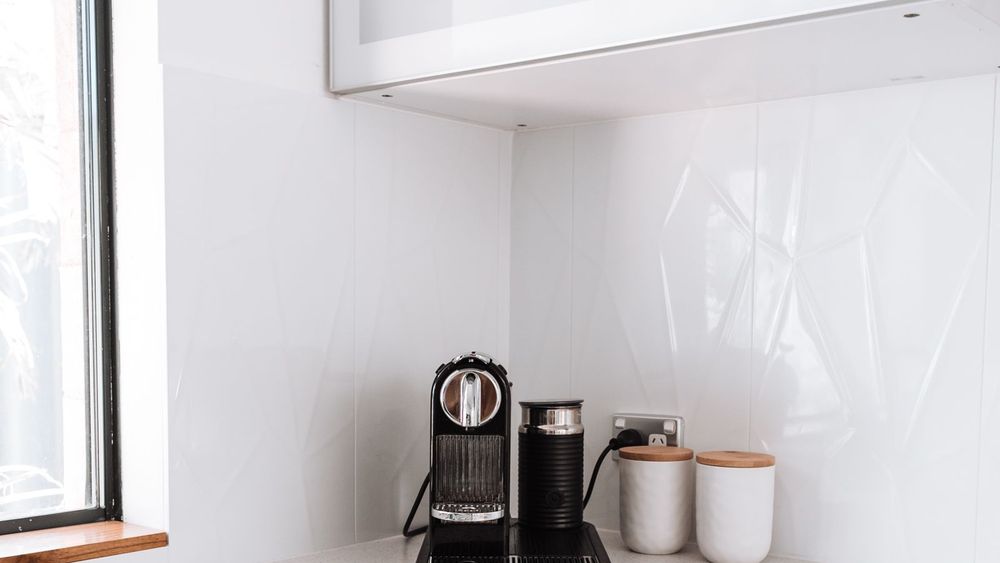
Nespresso CitiZ with Aeroccino, 8.9 points, place 2
With the Nespresso CitiZ with Aeroccino, the frother is in the box, and the place hangs on that: cappuccino without a second purchase. In our sub-scores it trails the Creatista Plus on build quality (8.9 to 9.5) and performance (8.8 to 9.4), and is ahead of it on handling (9.2 to 8.8) and value for money (8.4 to 7.9). The foam runs to a fixed procedure, and a latte macchiato glass uses a whole fill. As long as it is open whether milk foam will become a daily habit for you, it is in our assessment the more suitable of the two, and for us it is the editors’ pick.
Nespresso Vertuo Next, 8.6 points, place 3
One tenth above the CitiZ stands the Nespresso Vertuo Next on performance with 8.9, while on handling (8.6 to 9.2) and value for money (8.0 to 8.4) it is lower. Its place hangs on its range. It reads four capsule sizes from the code, and according to the instructions seven cup sizes come out of them, none of which requires a setting; the capsule container takes ten espresso or six mug capsules. More than the narrow front, the footprint is limited by 42.9 centimetres of depth and a cable of 75 centimetres from the machine. Anyone who switches from espresso to a mug over the course of the day changes nothing on it, but needs a worktop with this depth.
Senseo Original Plus, 8.5 points, place 4
There is almost nothing to operate on the Senseo Original Plus. It has neither a display nor menu navigation, the slider has two positions, and with the two pod holders that gives four combinations. It works at one bar, is 213 millimetres wide and weighs 1.718 kilograms; for one cup Philips gives under 21 seconds, after which it switches itself off. On value for money none of the eight stands higher than its 9.6. It got our value pick all the same less because of the approx. €59.90 than because of what is missing from it: what is not built in cannot fail. According to the instruction manual, it is intended solely for normal household use.
Senseo Switch, 8.5 points, place 5
Same overall score as place 4, a different route there: in our individual scores the Senseo Switch stands at 8.3 for build quality and 8.2 for performance, the Senseo Original Plus at 7.7 and 7.9, but on value for money it is at 8.6 below the latter’s 9.6. What the Switch alone of these eight can do: filter coffee as a second brewing route, with a paper filter, measured-out powder and a thermos jug without a hotplate, two to seven portions per run according to the data sheet. In this mode the system lock-in falls away, because ground coffee of your choice goes in. That costs around €36 more than the Original Plus, and a filter holder that has to be cleaned too; you rinse the water tank and thermos jug by hand, and it too is restricted to household use.
Tchibo Cafissimo Milk, 8.3 points, place 6
Tchibo calls the Cafissimo Milk the only machine with a built-in milk system in the current Cafissimo range. Cappuccino runs through at the press of a button, the button stores the foam and coffee quantities separately, and you set the drink quantity individually for five drinks between approx. 30 and 250 ml. It is ahead of the My Way 2 on build quality, performance and value for money; only on handling is it behind, at 8.5 to 8.9, and that fits the daily taking apart from the milk chapter.
Tassimo My Way 2, 8.1 points, place 7
On the Tassimo My Way 2 you choose intensity, size and temperature with three levels each, and four such combinations go onto the number buttons. Its place hangs on that, and it suits kitchens where not everyone drinks their coffee the same way. At approx. €59.00 it has the lowest guide price of these eight. From the purchase on, the pack counts: for the two coffee varieties its review checked in the Tassimo shop, a cup at the regular pack price of 14 September 2026 costs 33 to 44 cents, and one portion of Jacobs Typ Latte Macchiato Classico 87 cents.
Nespresso Vertuo Pop, 8.0 points, place 8
The Nespresso Vertuo Pop is the narrowest of these eight and, according to the two instruction manuals, 6.4 centimetres lower than the Vertuo Next, with the same code logic. Its limit is the 0.56 litre tank: on paper it is enough for two mugs from mug capsules of 230 millilitres each, and after five mug capsules the container for used capsules is full. On top of that, at approx. €75.90 it costs €6 more than the Next, whose tank holds almost twice as much water. It is therefore right for little coffee per day and a cupboard that hangs low over the worktop.
The eight in one table
| Model | The difference | Price | Our score | Pick this if |
|---|---|---|---|---|
| Sage Creatista Plus | Steam wand on the housing, eleven temperature and eight foam levels | approx. €489.99 | 9.3 | you make at least one milk drink every day |
| Nespresso CitiZ with Aeroccino | Aeroccino as a second device in the box, 1 l tank | approx. €167.89 | 8.9 | you want milk foam and have room for a second device |
| Nespresso Vertuo Next | Four capsule sizes read from the code, seven cup sizes according to the instructions | approx. €69.90 | 8.6 | your cup size varies between espresso and mug and the worktop is deep enough |
| Senseo Original Plus | One bar, direct start, two slider positions, no display | approx. €59.90 | 8.5 | you want black coffee and set nothing in the morning |
| Senseo Switch | Second brewing route with paper filter and thermos jug | approx. €95.99 | 8.5 | more than two people drink coffee at the same time at the weekend |
| Tchibo Cafissimo Milk | Milk container of approx. 400 ml plugs onto the housing | approx. €89.00 | 8.3 | several milk drinks are due straight after one another |
| Tassimo My Way 2 | Four memory buttons, three levels each for intensity, size, temperature | approx. €59.00 | 8.1 | several people set their drink differently |
| Nespresso Vertuo Pop | 25 cm tall according to the instructions, 0.56 l tank | approx. €75.90 | 8.0 | you drink one to two cups a day and there is little height free above the worktop |
Price and score are taken character for character from the data sheets of the reviews. What the table is not good for: it sets purchase prices side by side, while the larger part of the spending over the years depends on the portion, and the portions of these eight machines come from five different ranges.
Three price tiers and the sum in the pack
At the lower end two machines lie almost on the same figure, the My Way 2 at approx. €59.00 and the Original Plus at approx. €59.90, 90 cents apart. In this category the price says little about the equipment, and the tank shows it: 0.56 litres on the Vertuo Pop, 0.7 on the Original Plus, 1 litre each on CitiZ and Switch, 1.1 on the Vertuo Next, 1.2 on the Cafissimo Milk, 1.3 on the My Way 2 and 1.5 on the Creatista Plus. The cheapest of these eight thus has the second-largest tank, the Vertuo Pop at approx. €75.90 the smallest.
The middle ranges from approx. €69.90 to approx. €95.99. Between the Vertuo Next and the Senseo Switch lie €26.09, and within this span the premium buys quite different things: the milk system on the Cafissimo Milk, the second brewing route on the Switch, a smaller tank with a lower housing on the Vertuo Pop. There is no feature here that grows with the price.
€322.10 separates the CitiZ with Aeroccino from the Creatista Plus, two machines for the same capsule format. The gap mainly buys the milk system on the machine, plus a colour display and half a litre more tank. The capsule stays the same: both draw Nespresso Original. In our assessment, you get nothing more that can be pinned to the documents for this gap.
The real price tier is in any case not in the data sheet but in the pack. It is documented for two of these eight. For the Cafissimo Milk, with the Caffè Crema vollmundig variety at Tchibo’s prices of 8 September 2026 and two capsules a day, around €255 per year comes to from the large pack and around €313 per year from packs of 10; this is calculated for that one variety only. Even the cheaper route is, in the first year, almost three times the machine price. For the My Way 2, the same two cups a day with the two coffee varieties checked there give around €243 to €319 per year, and the capsules have caught up with the machine’s purchase price after two to three months. This cannot be transferred to other T DISCs, since even these two packs yield 16 or 21 cups at the same price. For the other six, their reviews give no annual calculation. For the two Vertuo, the capsule pages of nespresso.com gave no prices when we looked them up, the reviews of Creatista Plus and CitiZ contain no capsule price, and for the pods both Senseo reviews give none; that of the Original Plus leaves it out deliberately, because supermarket prices fluctuate too much to build an annual calculation on them.
Which household suits which machine
Milk goes into your cup every day, and nobody wants to learn a milk jug. The Creatista Plus is built for this household, because on it the machine ends the foaming itself. If several people at the table want cappuccino one after another in the morning, the container of the Cafissimo Milk speaks for it: it holds more than three times the quantity that Nespresso gives as the maximum for the foam programme of the Aeroccino 3. If it stays at two or three milky coffees a week, the CitiZ is enough, and you put the difference into capsules.
On weekdays you drink alone, at the weekend four people sit at the table. That is the case for the Switch, and because of the jug without a hotplate: a plate keeps coffee hot by continuing to heat it, a thermos jug only retains the warmth that is already in it. If you take the filter route only twice a year, the Original Plus will do and you save the premium.
Your cup size changes over the day, espresso in the morning, a mug in the afternoon. Vertuo is built for that. Of the two Vertuo in our catalogue, the Next fits better here, because its tank holds almost twice as much as that of the Pop and its capsule container takes six mug capsules. If you drink only espresso, you use just the small ones of the seven cup sizes.
The space gives little. Upwards, two share the lowest value of these eight, the Vertuo Pop and the Cafissimo Milk at 25 centimetres each. Above the Pop you additionally need air, because you open the head to insert each capsule. On the Cafissimo Milk the water container comes straight up and out, and Tchibo does not give its height; the instructions also require 15 centimetres of clearance to walls and one metre to hot surfaces, which rules out a cupboard compartment as a coffee station. In width the Pop is the narrowest at 13.6 centimetres, closely followed by the Vertuo Next at 14.2. Towards the back it gets tight with both Vertuo: 42.6 and 42.9 centimetres of depth are in their data sheets, while the Cafissimo Milk gets by with 31.5.
Several people, several ideas of how the coffee should be. Here the My Way 2 plays its memory buttons, each person puts their setting on a button of their own. Whoever drinks the same variety alone does not need memory slots; the Original Plus costs almost the same and offers only mild or strong on the slider. If you are still wavering between the systems, our coffee finder asks in four steps about brewing method, budget, convenience and milk drinks.
Who is missing, and why
The Nespresso Essenza Mini misses place 8 by two tenths with 7.8 points. It draws the same capsule as Creatista Plus and CitiZ, is according to Nespresso the smallest machine of the brand at 8.4 centimetres wide, and has no milk system. In our assessment, the quantities and the upkeep count against it: 0.6 litres in the tank, a container for five to six used capsules and no descaling indicator that the instructions describe. When descaling is due, you count along yourself with a table by water hardness, 300 cups at 20 °dH. At approx. €81.38 it is also dearer than both Vertuo machines that stand above it. Its review calculates with a capsule price from the Nespresso shop: Arpeggio at €0.49 per cup, as of 15 September 2026. The calculation holds only for that variety, since Nespresso advertises over 30 original varieties, and their prices can differ from one another.
Just behind stands the Tassimo Happy with 7.6 points and approx. €34.99, the lowest guide price of the ten. It takes the same T DISCs as the My Way 2, but according to Bosch has only a 0.7 litre tank, no water filter and no display, and is operated with a single button. Bosch describes no water hardness setting for it anywhere, so for limescale it is left with only the calc indicator.
None of the eight processes beans. Without a ready-made portion from the pack, the only way on this list is the filter holder of the Switch, with ground coffee of your choice. If you put beans into the Cafissimo Milk, Tchibo’s warranty does not cover a repair afterwards. Machines that grind themselves are in the best bean-to-cup machines list.
All products on the list side by side
| Product | Type | Rating | Price | |
|---|---|---|---|---|
| Creatista Plus | Capsule and pod machines | ★★★★★ 4.7 | approx. €489.99 | View on Amazon → |
| CitiZ mit Aeroccino | Capsule and pod machines | ★★★★★ 4.5 | approx. €167.89 | View on Amazon → |
| Vertuo Next | Capsule and pod machines | ★★★★☆ 4.3 | approx. €69.90 | View on Amazon → |
| Original Plus | Capsule and pod machines | ★★★★☆ 4.3 | approx. €59.90 | View on Amazon → |
| Switch | Capsule and pod machines | ★★★★☆ 4.3 | approx. €95.99 | View on Amazon → |
| Cafissimo Milk | Capsule and pod machines | ★★★★☆ 4.2 | approx. €89.00 | View on Amazon → |
| My Way 2 | Capsule and pod machines | ★★★★☆ 4.1 | approx. €59.00 | View on Amazon → |
| Vertuo Pop | Capsule and pod machines | ★★★★☆ 4.0 | approx. €75.90 | View on Amazon → |
The prices are guide values from our price boxes and change with the retailer. Prices are in euros from Amazon.de and may differ in your country. You will find the current status for each product on the linked product pages, and all products side by side in the comparison table.