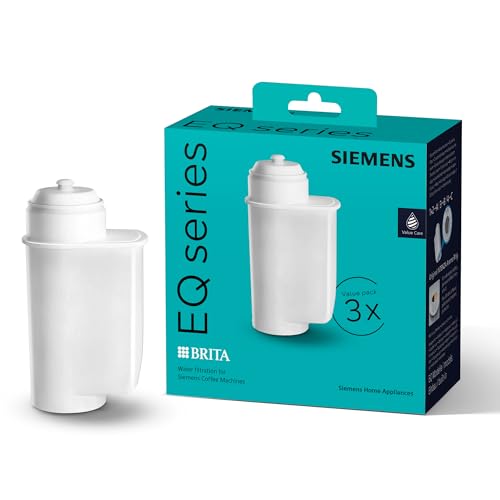
The TZ70033A is the three-pack of water filters that Siemens sells for its bean-to-cup machines. The box holds three cartridges of the BRITA INTENZA type. They sit in the machine’s water tank and, according to Siemens, are meant to reduce the limescale content of the water and cut substances that spoil smell and taste, such as chlorine. On Amazon.de the pack costs approx. €19.99 (as of September 2026), which is roughly €6.66 per cartridge.
According to the product page, the filter fits all bean-to-cup machines in the EQ range and the built-in bean-to-cup machines; the data sheet calls it “developed specifically for Siemens”. The Amazon text puts it more broadly and speaks of all Siemens bean-to-cup machines; we stick to the manufacturer’s narrower wording. The seller on the Siemens page is SEG Hausgeräte GmbH, and the BSH Group is the trademark licensee of Siemens AG. In the Amazon catalogue, Bosch is listed as the manufacturer.
We have not handled the cartridges and have not run a machine with them. Our basis is the Siemens product page and the data sheet for the TZ70033A (both retrieved on 25 September 2026), two service pages of Siemens customer service, the manual of the bean-to-cup machine Siemens EQ600 and the manual for the BRITA INTENZA filter, which BSH printed in 2017 as a Bosch edition. For the question about other brands, the Bosch service page on the water filter and Brita’s product page are added. A filter manual under the Siemens name is not linked on the product page. Where we quote from the Bosch edition, it is called the BSH manual here.
Three cartridges, one ring on the underside
The product photo shows a white cartridge next to a turquoise box labelled “EQ series” and marked “Value pack 3x”. The aroma ring cannot be seen in the picture. According to the EQ600 manual it sits on the underside of the filter and is part of the cartridge, so it is not an extra part in the pack. Whoever inserts a new cartridge therefore automatically has a new ring and sets it afresh.
Packed, the three-pack measures 140 x 70 x 140 millimetres according to the data sheet and weighs 0.3 kilograms. Amazon lists the same values in inches and pounds as item dimensions. The 12 that appears there as a unit count matches the packing quantity per outer carton in the data sheet.
The article number is 17008808, the EAN 4242003900437. TZ70033A is the new designation: on the product page Siemens writes “Replacement for TZ70033”. The accessories list in the EQ600 manual still gives the old number for the three-pack, next to the single filter TZ70003 and the six-pack TZ70063A. If you search your machine manual for the right filter and find TZ70033 there, the TZ70033A is therefore the right one.
In detail: water hardness, limescale and the position of the ring
The BSH manual reminds us that a cup of coffee is around 98 per cent water. Whatever is dissolved in that water ends up in the cup and in the machine. A brief word on the chemistry that applies to every bean-to-cup machine: hardness in tap water means dissolved calcium and magnesium salts. Part of it is present as hydrogen carbonate, and that breaks down when heated. What remains is calcium carbonate, the white deposit everyone knows from the kettle. A bean-to-cup machine heats the water for every drink, and the deposit settles in the heater and the pipes.
The EQ600 manual divides hardness into four levels and gives the ring position for each:
- Level 1, 1 to 7 °dH (German degrees of hardness; under 1.3 mmol/l): A
- Level 2, 8 to 14 °dH (1.3 to 2.5 mmol/l): A
- Level 3, 15 to 21 °dH (2.5 to 3.8 mmol/l): B
- Level 4, 22 to 30 °dH (over 3.8 mmol/l): C
According to the same table, level 4 is the factory setting of the machine. The BSH manual arrives at the same assignment. You do not need to convert anything, because both units are in the table; one degree of German hardness corresponds to around 0.18 millimoles per litre.
Siemens describes the purpose of the ring in two ways. On the product page it is for adjusting to the water hardness. In the EQ600 manual it is preceded by the sentence that the limescale content of the water influences the aroma and crema of the coffee, and the ring is turned to choose the aroma level for your own tap water.
The machine also wants to know the hardness, for a reason of its own: according to the EQ600 manual, this setting determines whether the appliance prompts you to descale in good time. Ring and menu are two separate places, and both follow the same hardness level.
How long does a filter last, and what does it cost?
Up to 50 litres or two months, whichever comes first. That is what the Siemens customer service page says, equating the 50 litres with 400 cups of coffee or 1,000 cups of espresso. If the machine asks for the change earlier, its display applies.
Divided, the 50 litres give 125 millilitres per coffee and 50 millilitres per espresso, so these are the quantities Siemens calculates with.
The two months cannot be stretched. The BSH manual justifies the change with hygiene and with the fact that the appliance would otherwise scale up and could be damaged. The EQ600 manual puts “Replace the water filter after 2 months at the latest” under a warning about possible appliance damage from limescale.
Around 60 days and 400 cups meet at just under 7 cups of coffee a day. Below that, you change a cartridge whose 50 litres have not yet been used up. Above that, the cartridge is used up sooner: at 10 cups a day the 400 are reached after 40 days.
Six months is therefore the upper limit for one pack. Over a year you need at least six cartridges, so two packs at approx. €19.99 each. At 10 cups a day it works out at a good nine cartridges (3,650 cups divided by 400); three packs just fall short, so it takes four. Per cup, €6.66 over 400 cups comes to just under 1.7 cents, and it does not get cheaper than that. Anyone who drinks only 2 cups a day spreads the same cartridge over around 120 cups and pays about 5.6 cents per cup.
In the Siemens shop the same three-pack cost €34.99 on 25 September 2026, so €11.66 per piece, calculated without a discount code.
Inserting and flushing: what the manuals require
The BSH manual describes handling in four steps:
- Set the aroma ring on the underside of the cartridge to the level you determined.
- Press the cartridge under cold water and swirl it gently until all air bubbles have escaped.
- Press the cartridge firmly into the water tank by hand, using the powder spoon if there is one.
- Remove the water tank and fill it with cold water up to the “max” mark.
Before the first coffee or espresso, the cartridge has to be flushed with water; exactly how is set out in the manual of the respective machine. On the EQ600 this runs through the menu: select “Care & maintenance”, press “INTENZA filter” and follow the instructions on the display. Via the same menu item you later register the cartridge as “Replace” or “Remove”. You repeat the steps at every change.
How a carelessly inserted filter makes itself felt is shown by the EQ600 troubleshooting table. If the appliance does not dispense a drink, one cause listed there is air in the filter. The remedy: hold the filter with the opening upwards in water until no more air bubbles escape, and press it straight and firmly into the tank connection. For the message “Please fill water tank.” with a full tank, the table lists seven causes: a wrongly inserted tank, sparkling water, a stuck float, a new filter that was not flushed as instructed, air in the filter, an old filter, and limescale deposits in the tank that clog the system. Three of the seven therefore concern the cartridge.
Water, health and standstill: the notes in the BSH manual
Under “Important notes” the BSH manual contains the following points, given here in full and in their order. The original combines our points 2 and 3 into one; we have separated them for clarity:
- Always store replacement cartridges factory-sealed in a cool, dry place.
- The cartridge may only be used with tap water supplied by the waterworks. According to the manual, this drinking water is constantly monitored and meets the statutory requirements for drinking water quality.
- If an official body orders tap water to be boiled, the filtered water must be boiled too. Once the boil-water notice has ended, the complete bean-to-cup machine should be cleaned and a new cartridge inserted.
- Filter cold water only.
- Clean the water tank regularly.
- Where it is generally recommended that tap water be boiled for certain groups of people (people with weakened immune systems are named), this also applies to filtered water.
- During filtering, the potassium content can rise slightly. For people with kidney disease or on a special potassium diet, the manual recommends consulting a doctor beforehand; the note is explicitly addressed to dialysis patients as well.
- If not used for a longer period, pour out the unfiltered water still in the tank and leave the cartridge in the tank. Before using it again, take out the cartridge, clean the tank and repeat the flushing steps.
- Water is a foodstuff: use the water in the tank within 1 day.
- If the recommendations on use and replacement of the cartridge are not followed, the publisher accepts no liability or warranty.
Two points have consequences for the purchase. Anyone who draws water from their own well is outside what the manual approves the cartridge for. And the one-day limit argues, in a household with two cups a day, for filling the tank after the first fill only as far as will be used by the next morning.
Descaling stays, and the filter has to come out for it
With a water filter you descale less often, says the service page on the EQ.700, and the promise goes no further than that. The EQ600 manual words it as a longer interval until the next service programme.
Before every descaling run you take out the cartridge. Siemens customer service puts it briefly: “Always remove the filter before you descale your appliance.” The BSH manual draws the circle wider and demands this before the start of any service programme, naming cleaning and descaling as examples.
Which product may go into the machine is set out in the manual of the bean-to-cup machine. The BSH manual itself sends you there: you should read the chapter on the water filter in the appliance’s instructions without fail in order to learn the exact settings. For the EQ600, under the warning that unsuitable cleaning and descaling agents could damage the appliance, this list applies: no pure citric acid, no vinegar and no vinegar-based products for descaling, no descaler with phosphoric acid, and only descaling and cleaning tablets developed specifically for the appliance. The accessories list gives the descaling tablets TZ80002A and TZ80002B, plus two multipacks, TZ80032A for descaling and TZ80003A for descaling and cleaning. For the “Descaling” and “Calc’n Clean” programmes, the manual advises a collecting container with a capacity of at least 1 litre.
How a descaling programme runs and what to watch for with other machine types is explained in our guide Descaling and cleaning. What the local hardness means for machine and coffee is covered under Water hardness and coffee.
What Siemens leaves open on the TZ70033A
The Siemens pages, the data sheet and both manuals do not state: dimensions and weight of a single cartridge, the material of cartridge and ring, the filter medium and its working principle, reduction values for limescale and chlorine in per cent or milligrams per litre, a shelf life for unopened cartridges, the kind of individual packaging, the difference between TZ70033 and TZ70033A including the date of the changeover, and warranty terms for the filter. It also remains open whether flushing water is counted in the 50 litres, and whether a cartridge you have taken out before descaling may go back into the tank afterwards. Whether a hardness strip is in the three-pack is also unclear: the BSH manual speaks of an enclosed strip, but the TZ70033A’s scope of delivery names only three water filters. Whether Siemens regards filters from other manufacturers as unsuitable, such as the De’Longhi DLSC002 or Philips AquaClean, is not stated in any of the sources.
Two statements come solely from the Amazon text and appear neither on the product page nor in the data sheet: “made in Germany” and the factor “up to 5 times less often” for descaling. We therefore treat them as retailer claims.
Which filter belongs with which machine
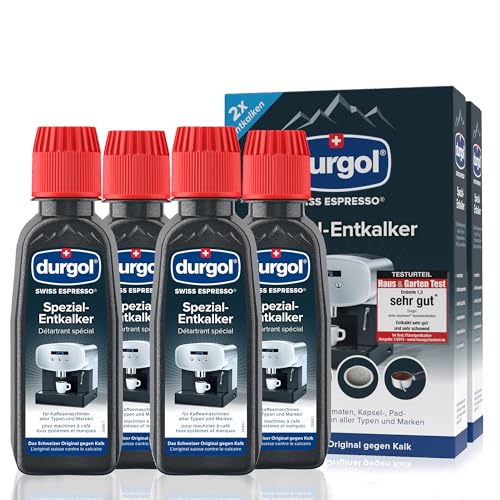
The three water filters in our catalogue are each designated only for particular brands: Siemens, Philips and Saeco, De’Longhi. Anyone who owns a Siemens bean-to-cup machine therefore really chooses only between this cartridge and running without a filter.
| Model | The difference | Price | Our rating | Choose this if |
|---|---|---|---|---|
| Siemens BRITA Intenza TZ70033A (this one) | three cartridges with aroma ring, 50 litres or two months each | approx. €19.99 | 8.7 | there is a Siemens EQ bean-to-cup machine or a Siemens built-in bean-to-cup machine in your kitchen |
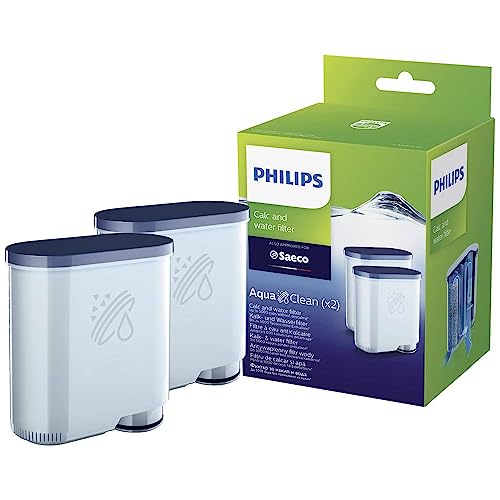
| Philips AquaClean CA6903/22 | own system for Philips and Saeco, according to Philips up to 625 cups per filter and replacement after 3 months at the latest | approx. €19.99 | 8.9 | your machine carries the AquaClean sticker on the water tank |
| DeLonghi Wasserfilter DLSC002 | filter from De’Longhi, one cartridge per pack | approx. €7.49 | 8.6 | you have a De’Longhi with a filter coupling in the water tank (when in doubt, according to the appliance manual) and only want to buy one filter |
| durgol swiss espresso | liquid descaler: dissolves limescale that has already settled | approx. €13.80 | 9.3 | your machine takes none of these filters and its manual does not prescribe a particular descaler |
The prices are for the whole pack as of September 2026, and the packs contain different things: three cartridges, two, one, four bottles of descaler. The column therefore does not allow a price per month of limescale protection. The rating is our editorial assessment based on the available data and features. For the EQ600, the durgol is ruled out according to its manual, because it allows only tablets developed specifically for the appliance. You can find filters, descalers and cleaners together under Cleaning & care, and the highest-rated ones in the best-of list for cleaning and care.
When this filter, and when something else?
Which machine goes with which filter is shown in the table above. If you have a suitable Siemens bean-to-cup machine, two things then decide about the cartridge.
First, the hardness. At level 1, that is under 8 °dH, little limescale accumulates. We would leave the filter out there and descale when the machine asks for it, unless the chlorine reduction, which Siemens gives as the second purpose, is worth two three-packs a year to you. Level 2 (8 to 14 °dH) is a genuine trade-off: around €40 a year for cartridges against less frequent descaling runs, and here it depends more on how much the descaling bothers you. From level 3 upwards, in our view more speaks for the cartridge, since the harder the water, the more limescale settles without it.
Then the volume. From about 7 cups a day the 50-litre limit sets the pace; the calculation is above under costs. For those who drink almost only espresso, the calendar remains decisive: you only reach the 1,000 espressos that Siemens attributes to a cartridge within two months at a good 16 espressos a day.
The filter is wrong for two groups: households with their own well (see the notes in the BSH manual above) and anyone who, from experience, dismisses replacement prompts. Whoever knows this about themselves risks exactly the scaling the manual warns about. For this group, in our assessment, running without a filter with a correctly set hardness level is the safer choice. The machine then reports by itself when it needs descaling.