Dallmayr has offered prodomo since 1964. The decaffeinated variant rounds out the line together with the naturally mild one, which is how the manufacturer itself describes its product family. 500 grams of whole beans, 100 per cent Arabica, article and model number 122 500 000, listed in the Amazon catalogue since 16 July 2013 under the title Dallmayr prodomo Entkoffeiniert 500g Ganze Bohne Arabica Kaffee. What the manufacturer publishes about this pack is spread across three sources: the brand page for the prodomo line, the shop listing for the 250 gram ground coffee and the feature bullets in the Amazon catalogue. Most of the figures in them apply to the line or to the caffeinated prodomo. Wherever such a figure appears below, the source is given next to it.
What you get for around nine euros
At the last check on 6 September 2026, the Amazon catalogue listed a price of €9.29 on Amazon.de for the 500 gram pack, which works out at €18.58 per kilo. The manufacturer does not sell this size itself: on the same day the Dallmayr shop showed eight items in the prodomo category, the decaffeinated variant only as 250 grams ground for €7.90, which is €31.60 per kilo.
The distributor is Alois Dallmayr Kaffee OHG, Dienerstraße 14 to 15 in Munich. The company traces its tradition back more than 300 years; the specialist coffee department there was built up in 1933 by a then 19-year-old coffee expert from Bremen named Konrad Werner Wille. The shop listing for the 250 gram ground coffee gives the origin as Germany, which refers to the roasting and not the cultivation.
The Amazon catalogue gives the weight only in pounds; converted, it is the stated 500 grams. A single pack is delivered, listed in the catalogue as a 1-pack.
What Dallmayr says about the bean, and what remains open
The manufacturer’s text is short. According to Dallmayr’s own description, for the decaffeinated prodomo fine Arabica highland coffees are decaffeinated, specially refined and completed by the Dallmayr full-aroma roast. The Amazon catalogue text says the same in a different order and adds the wording gently decaffeinated; in the Dallmayr shop the 250 gram ground coffee carries the same sentence with the addition 100% Arabica. On the manufacturer’s page the decaffeinated prodomo is at intensity 3 out of 5, the caffeinated one at 4 out of 5. As a taste promise, Dallmayr names a harmonious, balanced coffee with full aroma and explicitly recommends it for the evening too. That is manufacturer advertising. We have not drunk this coffee and therefore do not confirm it.
On the origin of the green beans, Dallmayr publishes information about the line: highland-grown coffee from Asia, Africa, and South and Central America, shaped by Arabica coffees from the fertile southern provinces of Ethiopia, washed after harvest in a special process. This description applies to the prodomo blend as a whole and not to the decaffeinated variant. Here is how we classify what washed means: the fruit pulp is removed before drying, the bean does not ferment inside the fruit, and the result in the cup is cleaner and more acidic than with naturally processed coffees.
The closest thing to a data sheet is a Dallmayr product specification for the caffeinated prodomo 500 g ground with the article number 037 000 000. It states 100 per cent roasted coffee, no allergens, no additives and country of origin Germany. You will not find an ingredients list or nutritional values on any product page, and there is a good reason for that: under the EU Food Information Regulation, roasted coffee is exempt from nutrition labelling, and a food made of a single ingredient needs no ingredients list.
That brings us to what is missing. Dallmayr publishes the following details about the 500 gram beans nowhere, neither on the brand page nor in its own shop nor in the Amazon catalogue. They are collected here so that the rest of the text does not have to return to them every few lines:
- the decaffeination process, meaning whether carbon dioxide, water or an organic solvent is used
- a residual caffeine value of its own in per cent or milligrams
- a roast level on its own scale, such as medium or dark
- the roasting location, a roast date and a best-before date
- the type of packaging, an aroma valve and the packaging dimensions
- a recommended grind size
- an approval for bean-to-cup machines or espresso machines
- certificates such as organic, Fairtrade or Rainforest Alliance
- a recommended retail price, since the manufacturer does not sell this pack size in its own shop
Decaffeinated: limit, residual caffeine, process
Under section 2 of the German Coffee Ordinance (Kaffeeverordnung), roasted coffee may only be called decaffeinated if it contains at most one gram of caffeine per kilogram of coffee dry matter, which is 0.1 per cent. If the word is on the pack, Dallmayr must keep to this threshold. The ordinance therefore sets the upper limit, not the actual content.
Some calculation is still possible. The ratio from the catalogue text is documented: around 15 cups of decaffeinated prodomo equal the caffeine content of one cup of prodomo. For the caffeinated prodomo 500 g ground, the product specification mentioned gives 1.2 to 1.4 per cent caffeine. Divided by 15, that lands at around 0.08 to 0.09 per cent, just under the legal maximum. The two starting values come from two different products, the division is our own, and it is good for the order of magnitude. For a dose of 8 grams that is roughly 7 milligrams of caffeine in the ground coffee, compared with around 100 milligrams for the same amount of caffeinated prodomo. The limit of 0.1 per cent would allow up to 8 milligrams for 8 grams.
On the process, Dallmayr is silent. The company’s own coffee glossary describes decaffeination in general as a process in which caffeine is partly or almost completely removed from coffee beans or tea leaves by solvents, without reference to prodomo. Second-hand statements about the process exist, they contradict each other and rest on no manufacturer evidence. Which ones they are is explained in the FAQ below.
The caffeine is removed from the green coffee, that is before roasting: the bean is swollen, the caffeine migrates out with water or solvent, then it is dried and only then roasted. The residual caffeine content therefore cannot be read from the roast level.
Can I have the beans ground in a bean-to-cup machine?
Dallmayr does not approve this variant for it. On the manufacturer’s page the preparation methods are pour-over, French press or plunger pot, and drip coffee machine; the Amazon catalogue names the same three in other words, and the shop listing for the 250 gram ground coffee only drip machine and plunger pot. None of the three lists includes a bean-to-cup machine.
It does appear once, elsewhere: Dallmayr writes about the prodomo line that the whole bean is also suitable for the bean-to-cup coffee machine and for the French press with a coarse grind. That sentence belongs to the caffeinated prodomo. Technically there is nothing against filling decaffeinated beans into the hopper anyway; they are whole beans like any others.
Our assessment: if you tip the beans into a bean-to-cup machine you will not break anything, but you are moving outside what the manufacturer states for this product. If an explicit approval matters to you, you are better off with the Dallmayr Crema d’Oro, which Dallmayr lists for bean-to-cup and espresso machines.
Dose, water temperature and grind size
For the pour-over, Dallmayr recommends on the prodomo page 7 to 12 grams of fresh, medium-fine ground coffee per cup, depending on cup size, and water a little over 90 degrees Celsius, because otherwise the coffee becomes too bitter. The tip applies to the line.
If you switch between pour-over and plunger pot you have to readjust anyway: coarse for the French press, medium-fine for the filter. The brew calculator works out the coffee and water amounts for both methods, the steps are in the guide pour-over filter coffee and, for the pot, in the French press guide.
If your pour-over runs through noticeably faster than with the caffeinated prodomo, set the grind one step finer. If the water stays on the coffee bed for a long time, go one step coarser. The German Coffee Association (Deutscher Kaffeeverband) writes that the grind size should be set correctly according to the preparation method and roast, so readjusting is part of every change of roast, as described in the guide coffee beans basics.
Price per kilo and what a year of evening coffee costs
At 7 to 12 grams per cup, 500 grams give between 42 and 71 cups. At the catalogue price of €9.29, a cup costs you between 13 and 22 cents, depending on how strongly you dose.
One cup per evening, 365 days a year, comes to 2.6 to 4.4 kilograms of beans. At €18.58 per kilo that is roughly €48 to €82 a year. If you instead choose the ground 250 gram pack in the Dallmayr shop, you pay €82 to €139 for the same amount, around 70 per cent more. Whether that is down to pack size, grind or point of sale cannot be separated from two prices, because all three change at the same time.
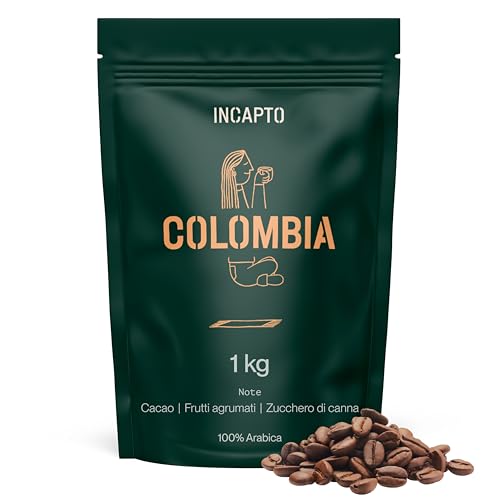
Incidentally, the small pack does not automatically make the kilo price expensive. In the coffee beans comparison the kilo prices range from €13.63 for the Gimoka Classico to €35.95 for the Incapto Single Origin Colombia, and the comparison winner 360° Rundum Ehrlich is just below that at €35.59. At €18.58 this 500 gram pack sits exactly in the middle by kilo price, in 12th place out of 23, and €2.59 above the Dallmayr Crema d’Oro in the kilo bag.
A bean has no running costs in the narrow sense, neither filter cartridges nor descaler. What does come on top is a grinder, if you take the whole bean. Without a grinder the ground variant is the more honest calculation, even though it costs clearly more per kilo from the manufacturer.
What else is worth considering?
| Type | Roast and origin | Price per kg | Our score | Choose this if |
|---|---|---|---|---|
| Dallmayr Prodomo Decaf (this one) | 100% Arabica, full-aroma roast, intensity 3 out of 5, origin Germany according to the Dallmayr shop | approx. €18.58 | 8.3 | you want coffee in the evening and use a pour-over, French press or drip machine |
| Dallmayr Crema d’Oro | Arabica-Canephora blend, intensity 6 out of 10, 1,000 g | approx. €15.99 | 8.6 | your beans go into a bean-to-cup machine and caffeine is not an issue for you |
| Melitta BellaCrema La Crema | Strength 3 out of 5 according to Melitta, medium roast and roasting country Germany according to the Amazon bullet, 1,000 g | approx. €15.89 | 8.6 | you want a bean with strength 3 out of 5 and a stated bean-to-cup approval and do not need to avoid caffeine |
| 360° Rundum Ehrlich Bio Honduras | Single-origin Honduras, organic according to the supplier, low acid, hand-roasted, 1,000 g | approx. €35.59 | 9.3 | acidity bothers you and not the caffeine, and origin transparency is worth double the kilo price to you |
All kilo prices are as of September 2026. For the Prodomo Decaf the figure is the Amazon catalogue price of 6 September, converted to one kilo; for the other three it is the price from the price column of their respective reviews. The other three contain caffeine and are therefore only an alternative if you do not need to avoid it. The scores are our editorial assessment based on manufacturer information and catalogue price.
Who the bean suits and when another is better
If you use a pour-over, drip coffee machine or plunger pot, you are in the field for which Dallmayr lists this bean. With one evening cup a day, 500 grams last roughly six to ten weeks, after which it is time to buy again.
Residual caffeine remains; the order of magnitude is in the calculation further up. Anyone who has to avoid caffeine completely for medical reasons needs a coffee with a stated value and, if in doubt, should clarify this with their doctor or pharmacist. For background reading, the guide decaf coffee sorts out the common processes and their differences.
A common mistake when reaching for the decaffeinated shelf: caffeine and acidity are two different things. Decaffeination removes the caffeine from the bean and does nothing to the acidity. If acidity bothers you, the way forward is through origin and roast profile, for example the 360° Rundum Ehrlich Bio Honduras, which according to the supplier is organic-certified and low in acid, costs roughly double per kilo and contains full caffeine.
We would advise against it if you want to avoid chemical solvents and need a documented process statement for that, or if a seal such as organic or Fairtrade is a condition of purchase. Both are in the list further up.
The 8.3 points rest on a narrow basis, namely manufacturer information and a catalogue price. You cannot switch to an alternative within our catalogue anyway: among the 23 coffee bean reviews there is no second decaffeinated bean. If the manufacturer ever provides a residual caffeine value or a process statement, we will recalculate.