Lelit sells two portafilter machines under the name Anna, and the PL41TEM is the one with PID. A brass boiler with 250 millilitres supplies brew water, hot water and steam, you operate it with rocker switches, and on a small display you set the boiler temperature in degrees. Our price box lists the machine at approx. €489 on Amazon.de. In the German Lelit shop it was €589 on 25 September 2026.
It is built in Italy, which Lelit states for all its own products. The manual names LELIT srl in Castegnato near Brescia as the manufacturer. The German warranty page, in turn, speaks on behalf of Sage Appliances GmbH, whose brands there include Breville and Baratza alongside Lelit. The Anna’s control does not carry its own brand name such as LCC: Lelit speaks of a PID display or thermo-PID control, and the LELIT Control Center (LCC) belongs to the Victoria and the Elizabeth.
Boiler, switches, housing
Lelit describes the brew system as a brass single boiler. The German shop calls the same boiler “Dampfkessel 250cc” (steam boiler), while the product page and data sheet speak of the coffee boiler. In both cases it means the one boiler that everything comes from. The manual gives the power consumption as 1,050 watts. There is also a 3-way solenoid valve, which according to Lelit dries the coffee puck. A valve like this opens an outlet after the shot, through which the residual pressure above the basket escapes into the drip tray instead of staying in the coffee grounds.
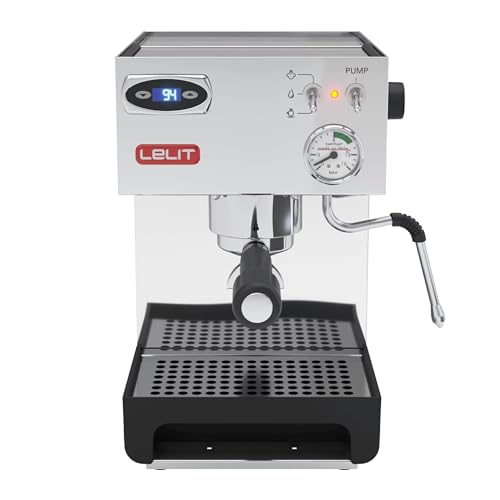
On the product photo the display is at the top left, and at the top right there are two rocker switches with an orange indicator light between them, with PUMP written above the right one. Below sits the round pressure gauge with a green arc. The manual assigns the switches: one selects between coffee, hot water and steam, the other starts and stops the pump. The main switch is on the right side of the housing, as is the knob that releases steam and hot water.
The tank holds 2.7 litres, and a window on the side shows the fill level. According to the manual, access is under a lid at the top rear of the machine, so the tank comes out upwards. You remove it carefully without damaging the hoses, rinse it and fill it with cold water, and after putting it back you check that the hoses are not kinked.
Before the first coffee, the manual has you run water for 2 minutes each, first from the brew group with the portafilter inserted, then from the steam and hot water nozzle, waiting at least 1 minute in between. In everyday use this leaves one short step: before every shot you run water from the group into the drip tray for 5 seconds, with the portafilter clamped in.
According to Lelit, the housing is entirely stainless steel, which the manufacturer justifies with corrosion and heat resistance. The German shop describes the drip tray as a stainless steel tray with a wire grid. The product photo, however, shows a dark tray with a perforated cover, and Lelit also sells a wire grid for the Anna as an upgrade kit (more on that below). Neither source tells you for certain which version is in the box. On top there is a cup warmer, which the manual calls passive: it only gets warm while the machine is switched on.
On dimensions, Lelit’s own documents contradict each other. The product page and data sheet give 23 × 38 × 34 cm, the manual 34 × 23 × 27 cm, so a depth of 27 instead of 38 centimetres. The Amazon catalogue converts to approx. 34 × 23 × 26.5 cm, which is closer to the manual. 23 and 34 centimetres appear in all sources, although Amazon uses swapped field names (the 23 cm is listed there as length, the 26.5 cm as width), and the product photo fits: the front is visibly taller than it is wide. We would plan with 38 centimetres, so that the machine fits safely in either case. On weight, the product page, data sheets and manual give 7.5 kg, while the German and British Lelit shops give 7.856 kg.
In detail: what the PID regulates on a single boiler
A single boiler without PID holds the temperature with a thermostat. It switches the heating on at one point and off again at another, and in between the water cools down and heats up again. When you start the shot therefore helps decide how hot the water is. A PID control, by contrast, continuously calculates how far the actual value is from the set value and how fast it is moving, and meters the heating power accordingly. The swings get smaller.
On the Anna, according to the manual, the thermo-PID control shows the temperature in the boiler and regulates it there. It is set to 95 °C at the factory and can be adjusted between 80 and 130 °C. The way there: press the ▼ button until PRG appears in the display, then the ▲ button, then choose the value with both arrows. Three seconds after the last button press, the control saves the setting.
Right next to that is a limitation: during heating up, drawing coffee or drawing hot water, the temperature can deviate from the set value by +/- 10/12 degrees according to the manual. The number you set therefore describes the boiler, and even there it swings as soon as water flows. If you shift the temperature for a lighter or darker roast, it is best to compare shots under the same conditions, for example always after the same waiting time.
Whether the PID also regulates the steam is inconsistent across Lelit’s sources. The text in the German shop says the PID display controls boiler and steam temperature. The PL41TEM manual describes only a single boiler value, the German data sheet only an adjustable boiler temperature. A separate steam mode at 120 to 140 °C is named only in the manual for the Australian variant PL41TEMDAUS4I80, which calls it Dual PID, and that cannot be transferred to the European machine.
Lelit gives the pump as 15 bar. A figure like this describes the most the pump can manage. How much pressure builds up in the basket during a shot depends on the resistance of the coffee grounds, that is, on grind size, dose and tamping. That is exactly what the gauge shows: its green zone is between 8 and 12 bar according to Lelit, and between 8 and 11 bar in the listing text on Amazon (brand Lelit). If the needle is above 14 bar and no coffee comes out, the troubleshooting table names four causes, which are in the questions below.
Can you make espresso and milk foam at the same time?
No. The Anna has a single boiler, and it supplies either brew water or steam. For milk foam you set the toggle lever to steam and wait until the ready light comes on. Only then do you open the knob on the side.
According to Lelit, the nozzle is multidirectional, so it can be swivelled, and it has scald protection. Steam and hot water come out through it. The manual introduces the next step with a capitalised IMPORTANT: after every steam draw, especially after frothing milk, you open the knob fully once more, switch to hot water and run the pump until water comes out of the nozzle. On single-boiler machines this refills the boiler, which lost water during steaming, and brings it back down from steam temperature. Afterwards you wipe milk residue off the outside of the nozzle.
For a cappuccino you therefore switch once from brewing to steam and back again. If you make four milk drinks in a row at the weekend, you repeat this sequence up to four times. For milk handling at the wand, there is more in the guide How to froth milk.
On heat, the manual has its own list of warnings. The surfaces stay hot for some time after use, and you should only touch handles and knobs. You should not come into contact with splashing water or steam, never point the steam or hot water jet at parts of the body, and touch the nozzle only with care. You do not touch the cup warmer during operation, and you only put espresso cups, cups and glasses meant for the machine on it, thoroughly dried. You never remove the portafilter while coffee is being dispensed. Parts with the CAUTION HOT label are very hot according to Lelit and must be handled with the greatest care.
Scope of delivery, baskets and the LELIT57 size
According to the German Lelit shop, the box contains a portafilter with two spouts and a classic handle, a basket for one dose of 7 to 9 g, one for two doses of 14 to 18 g, a blind basket, a basket for paper pods, a tamper and a spoon for coffee powder. According to the manual, the tamper and spoon are plastic. The pod basket is meant seriously, and the manual says: “Works with ground coffee and with pods.”
The lists do not match on the blind basket. The German shop and the 2024 English data sheet include it, while the English product page, the German data sheet and Amazon do not. The manual lists it as component number 12 and needs it for backflushing. If it is missing from the box, ask the seller.
The brew group is called LELIT57. The listing text on Amazon (brand Lelit) gives its diameter as 57.35 mm and distinguishes it from the larger LELIT58 group. According to the data sheet, it fits LELIT57 barista tools. Lelit makes no statement on baskets, tampers or portafilters from other brands, neither approving nor ruling them out. One thing can still be said: the basket sits inside a 57.35 mm group, so a tamper with a 58 mm diameter is too wide for it.
If you want to upgrade, you will find what fits in the Lelit range. The British Lelit shop links on the Anna page to a basket set, a bottomless portafilter with a classic handle, and portafilters with one and with two spouts. There is also the PLA812S upgrade kit for the Anna, a stainless steel grid.
What else is worth considering?
| Model | The difference | Price | Our rating | Choose this one if |
|---|---|---|---|---|
| Lelit Anna PL41TEM (this machine) | PID display for the boiler temperature, LELIT57 group with 57.35 mm | approx. €489 | 8.6 | you mainly drink espresso and can get by with LELIT57 accessories |
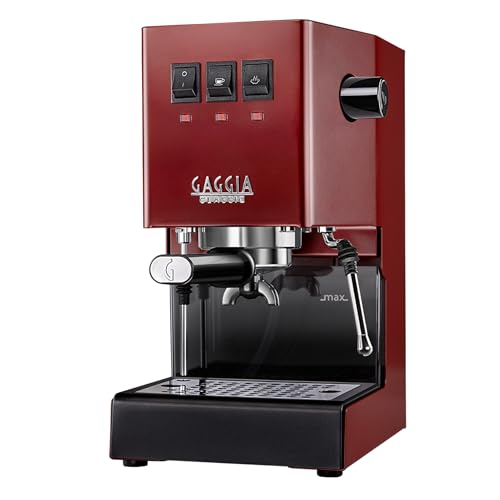
| Gaggia Classic Evo Pro | 58 mm portafilter according to Gaggia, operated with three rocker buttons with indicator lights | approx. €499.52 | 9.4 | the 58 mm format matters more to you than an adjustable boiler temperature |
| Sage Bambino Plus | automatic steam wand, 54 mm portafilter | approx. €479.90 | 8.4 | you would rather have milk foam made automatically than learn it at the wand |
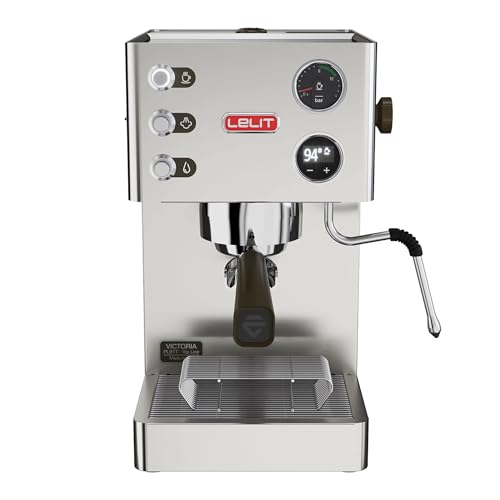
| Lelit Victoria | LELIT58 group, 300 ml brass boiler, OLED display with brew time | approx. €799 | 9.1 | you want to read off temperature and brew time and are willing to pay clearly more for it |
The prices come from our catalogue and can differ from the current price. The rating summarises our editorial assessment based on the available data and the construction; it is not based on a measurement.
When the Anna, when another machine?
Milk first. If you mainly drink espresso and an occasional cappuccino, the single boiler hardly matters. If you want milk foam to work without practice, the Sage Bambino Plus is the obvious alternative, because its steam wand froths automatically, whereas on the Anna you guide jug and wand yourself. In our catalogue it is around €9 below the Anna, so price is not the deciding factor here.
Then accessories. The Gaggia Classic Evo Pro costs around €11 more than the Anna, and Gaggia states a 58 mm portafilter. In return, on the Anna you choose the temperature as a number, and in our comparison that is the real reason to prefer it over the Gaggia.
On budget, the grinder is part of it. Neither the Anna nor the Gaggia or the Bambino Plus has a grinder, and if you draw the line at €500, you have spent the money for the machine with any of the three and not yet ground a single bean. What matters in an espresso grinder is covered in the grinder guide. The Lelit Victoria costs €310 more than the Anna and shows the brew time in the display in return; in our assessment that only pays off if the grinder is already on the counter.
Counter space is quickly measured. The width of 23 centimetres is the smaller problem, because above the machine you need more than its 34 centimetres of height, since the lid of the tank compartment is at the top rear according to the manual. Under a wall cabinet, measure beforehand whether the lid opens and the tank fits out.
And the willingness to adjust. The Anna starts and stops the pump with a toggle lever, so you decide yourself when the shot ends. You also find grind size, dose and temperature yourself. If you do not want that, then in our assessment a bean-to-cup machine will serve you better than any machine in the table above. All machines in the category are in the espresso machine comparison.
Cleaning, backflushing, limescale
The manual requires cleaning at least once a week. Beforehand you pull the mains plug and let the machine cool down. On the outside you use a soft cloth, preferably microfibre, dampened with clear water. Abrasives are forbidden, and the machine must not be immersed in water or cleaned with a jet of water. You may rinse the removable parts under lukewarm running water, but baskets and portafilter must never be washed in the dishwasher.
After every use you clean the steam nozzle and portafilter carefully, the portafilter because of fat residues. You wipe the nozzle on the outside with a damp cloth and let a little steam out so that milk residue does not block the passage. You do not need to clean the baskets themselves after every shot, the only important thing is that the holes stay clear.
Lelit recommends backflushing at least once a week or every 100 coffees. For this you put the blind basket in the portafilter, add a sachet of cleaning agent with 3.5 grams and clamp the portafilter in. Then you switch the coffee switch on for about 10 seconds, stop, wait 10 seconds and repeat that five times without removing the portafilter. Afterwards you rinse the portafilter with water from the group, brush the group and gasket, wipe with a damp cloth and repeat the cycles without cleaner. You throw away the first coffee afterwards. Lelit names the cleaner PLA9201 and the brush PLA9101 as materials; the microfibre cloth appears in the manual under the same number.
For soaking, you stand baskets and portafilter in a container with the handle up, add two sachets of cleaner (7 grams) and fill with hot water until the metal part of the portafilter is completely submerged. After at least 15 minutes you rinse everything thoroughly with warm drinking water. Here too: the first coffee goes down the drain.
On limescale, Lelit relies on prevention. According to the manual, how fast it forms depends on use and water hardness, and deposits block the channels and lower the outlet temperature. That is why Lelit recommends always using a resin filter in the tank. Which one is covered in the questions below. For descaling itself, the manual says in capital letters to put only natural descaler in the water tank. How to determine the hardness of your tap water is explained in our guide Descaling and cleaning.
What Lelit does not state about the Anna
In the Lelit sources we read (product pages, data sheets, shops and manual), the following remain open: the pump type, the setting of the overpressure valve, the step size of the display, a reheating time until steam readiness, a descaling interval, the material of the brew group, portafilter and cup warmer, the noise level in decibels, the cable length, a standby or automatic switch-off, pre-infusion, a shot timer, the brew temperature at the group, the year of market launch and the duration of spare-parts supply.
Who is it suitable for?
With children in the house, the manual sets clear rules. Children from 8 years and persons with reduced physical, sensory or mental capabilities or a lack of experience may use the Anna only under supervision or after instruction in safe use, and only if they understand the hazards involved. Children must not play with it, and children do not do cleaning and maintenance without supervision. Machine and mains cable belong out of reach of children under 8 years, as do plastic bags and foam from the packaging. According to the manual, you do not lay the mains cable over the worktop or table, where children could pull on it or trip over it by accident.
Setting up has its own step in the commissioning: a level and stable surface, away from heat sources and water sources. We do not reproduce the General Notes (20 points) and the Basic Safety Information (21 points) of the manual in full here; both lists should be read completely before first switching on.
For the place of use, the manual names the household and similar applications, namely staff kitchens, offices and related working environments, guests in hotels, motels and other residential settings, and bed and breakfast and similar establishments. Lelit rules out any use other than the intended one, and the sentence on continuous operation reads literally in the German version that the appliance is not designed for continuous, commercial or professional grinding, although the Anna does not grind at all. The manual names coffee and hot drinks made from hot water or steam, as well as preheating cups, as the purpose. If you want to equip a kiosk or an espresso bar, the Anna is the wrong choice.